
After Hours School Security: Protecting Facilities, Equipment, and Gyms
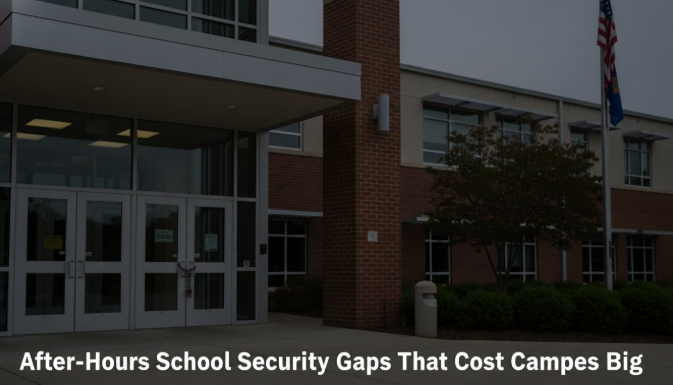
After the last bell, campuses get quieter, but the risk picture changes fast. Doors get tested, equipment gets targeted, and one weak spot can turn into a long repair list by morning.
If you manage security for schools in Southern California, this guide shows what to protect after hours, where plans usually break down, and what to fix first with professional security guards for schools and reliable school security services.
After-Hours Risk Is Real: Vandalism, Theft, And Unauthorized Entry On Campuses
After-hours security is not just a “nice to have.” In the 2021–22 school year, 35.8% of public schools recorded at least one incident of vandalism, and 20.2% of public schools recorded at least one incident of theft. Those are national figures, but the lesson applies locally: empty buildings, open fields, and isolated parking areas create predictable unauthorized entry opportunities.
If you are responsible for school security guard services after hours, the goal is simple:
- Reduce opportunity (doors, fences, lighting)
- Increase detection (security cameras, intrusion alarms)
- Ensure response (patrols, clear roles)
- Keep proof (logs and incident reporting)
That last point is where many campuses struggle. A plan that is not documented becomes a plan nobody can verify, even when a school security company is involved.
Control Exterior Doors And Key Control Before You Add Anything
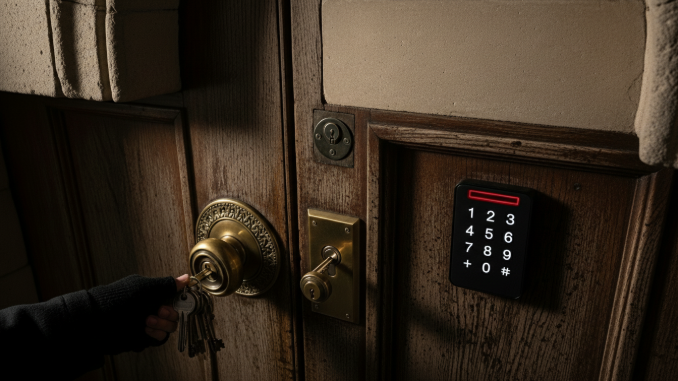
Most campuses already do a lot during the day. In 2021–22, 97% of public schools controlled access to school buildings during school hours, 97% required visitors to sign in and wear badges, and 93% used security cameras to monitor the school. After hours, the weak points are usually different: staff side doors, gym doors, portable access, and shared keys.
Fast fixes for access control that work in real life:
- Create a single after-hours “open list” for exterior doors that may be used, and keep everything else locked
- Tighten key control so keys and access cards are assigned, tracked, and recovered
- Set a rule for propped doors and hold the line, even when it is inconvenient
- Close off hallways so after-hours users cannot wander into admin offices or storage
For security companies for schools, this is the moment you find out if they run a system or place a body. Your school security guard services team should be able to help you write a lock-up routine and a simple verification checklist.
Treat Gyms Like High-Value Zones With Their Own After-Hours Plan
Gyms are a common after-hours magnet: practices, rentals, community leagues, and events. They also contain expensive equipment and multiple entry points. The safest approach is to treat the gym as a separate zone inside the campus, with its own rules.
What to secure for gym protection with campus security guard services:
- Gym exterior doors and any side gates near the gym
- Equipment rooms, storage cages, and scoreboards
- Concessions and booster club storage
- Hallways that connect gyms to classrooms
Fast fixes that reduce loss quickly:
- Use access control that restricts after-hours users to gym-only paths
- Place security cameras to cover gym entrances, parking approaches, and equipment room doors
- Test intrusion alarms on gym doors that should never be opened after hours
- Add “close-down” checks after every rental or practice
If you run a private campus, this still applies. Good private school security is about boundaries: what spaces are open and what spaces are not, supported by consistent security guards for schools.
Security Cameras Need Coverage Checks After Hours, Not Just Installation
Many campuses install cameras and assume the job is done. After-hours issues prove the opposite. Cameras are only useful when they cover the right zones, record consistently, and connect to a response plan that your campus security services can follow.
Practical camera priorities for after-hours security for schools:
- Main parking lots and drop-off lanes
- Gym entrances and equipment rooms
- Perimeter “quiet sides” where people cut through
- Admin entrances and front office doors
- Portable classrooms and storage yards
A clean process looks like this:
- Weekly check that security cameras are online and recording
- Monthly review of blind spots after seasonal lighting changes
- A written response step when a camera alerts: verify, dispatch, document
This is where school security specialists add value. They do not just watch. They help make sure your coverage actually matches how the campus is used after hours.
Intrusion Alarms Work Best With A Clear Response Workflow Every Time
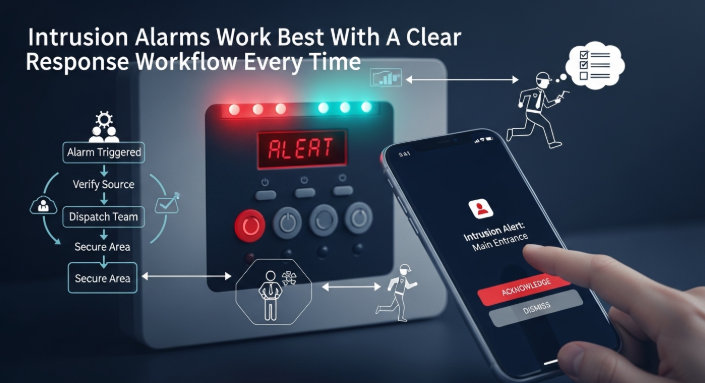
Alarm systems are powerful, but they can also create noise. A good after-hours plan defines what happens the moment an alarm triggers and how your school security staffing supports that response.
A strong workflow for intrusion alarms includes:
- Who receives the alert first
- Who checks cameras or verifies the zone
- Who responds on site and how fast
- When police are contacted
- What gets documented afterward
A layered campus approach connects access control, security cameras, and intrusion alarms so each layer supports the other. In plain terms: locks delay, cameras confirm, alarms notify, and trained people respond. That is the difference between “systems installed” and real school security services.
Lighting And Parking Lots Decide Whether Trespass Turns Into Damage
After-hours crime loves darkness. A single unlit corner can become the “regular entry point” for repeated trespassing and vandalism. Lighting also makes cameras more useful and makes patrols safer for a security guard at schools.
Fast fixes for lighting that show results:
- Audit the three darkest zones: gyms, back lots, and portable areas
- Replace outages within 24 to 48 hours, not “next month.”
- Add motion lighting where full lighting is not realistic
- Keep shrubs and sightline blockers trimmed back
Pair lighting upgrades with visible patrols. When people see routine checks, they are less likely to test the campus, especially when school security staffing is consistent night to night.
Patrols And Incident Reporting Create Proof, Not Just Presence Nightly
Schools do not just need coverage. They need proof that checks happened and issues were handled consistently. That is why patrol structure and documentation matter in school security guard services.
A practical after-hours routine for school security guards, protective service style coverage:
- Start of shift perimeter walk and door check
- Timed patrol loops that include gyms, lots, and storage
- End of shift lock check and written handoff notes
What good incident reporting should include:
- Exact time, exact location, and who was involved
- What was observed, what action was taken, and who was notified
- Photos when appropriate
- Follow-up items (repairs, lighting replacement, door hardware)
This level of documentation is how security guards for schools help administrators avoid repeat issues. Patterns become visible, and fixes become targeted.
School Security Staffing Options For Southern California After-Hours Coverage
Southern California campuses have varied use patterns: sports, rentals, community programs, and evening classes. The right staffing model depends on traffic, layout, and loss history, and it should be easy to explain to stakeholders as part of your security for schools plan.
Common options for school security staffing:
- On-site guard: best for constant after-hours use, multiple events, or repeated issues
- Mobile patrol: best for quiet campuses that need reliable checks and fast response
- Hybrid: on-site coverage during events plus patrol checks on off-nights
- Monitoring support: best when camera coverage is strong and response is defined
For community colleges and larger sites, college campus security guard services often need multi-zone coverage with clear access boundaries for gyms, lots, and admin buildings, all under one consistent set of post orders.
Questions Schools Should Ask Before Hiring A Security Provider This Week
Use these questions to vet any security companies for schools and avoid vague promises:
- How do you manage access control after hours when multiple groups use the gym?
- What is your standard for key control and badge control on campus?
- Do your guards complete documented patrols with time-stamped checks?
- What does your incident reporting look like, and how fast do we get it?
- How do you handle intrusion alarms and false alarms without wasting response time?
- How do you verify security cameras are working and covering the right zones?
- Who supervises coverage and updates post orders as schedules change?
These questions keep the conversation practical and help you choose a school security company that runs a real program, not just a schedule.
How Flag Guard Supports After-Hours School Security Across Southern California Campuses
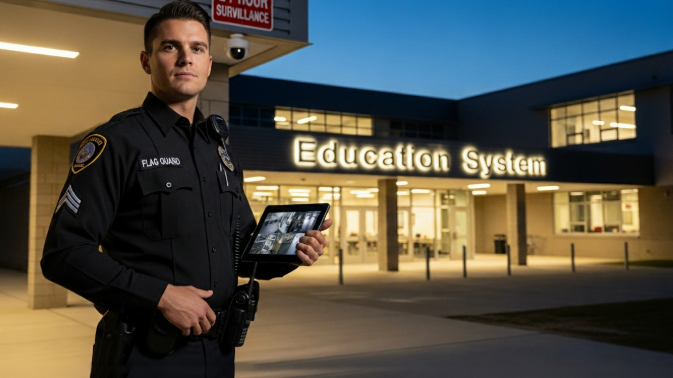
At Flag Guard, our school security guard services are built around entrances, visitor policies, daily schedules, and student safety priorities. See our Campus & Education Security coverage for what we include and how we structure posts and reporting.
We also support campuses with a layered mix of solutions, including Surveillance & Monitoring and Mobile Patrol when that fits your after-hours risk windows.
We serve schools and campuses across Southern California, including Los Angeles, Orange, Riverside, San Bernardino, and Ventura.
If you want a fast assessment and a clean coverage plan for your campus, request a quote through Get a Quote.