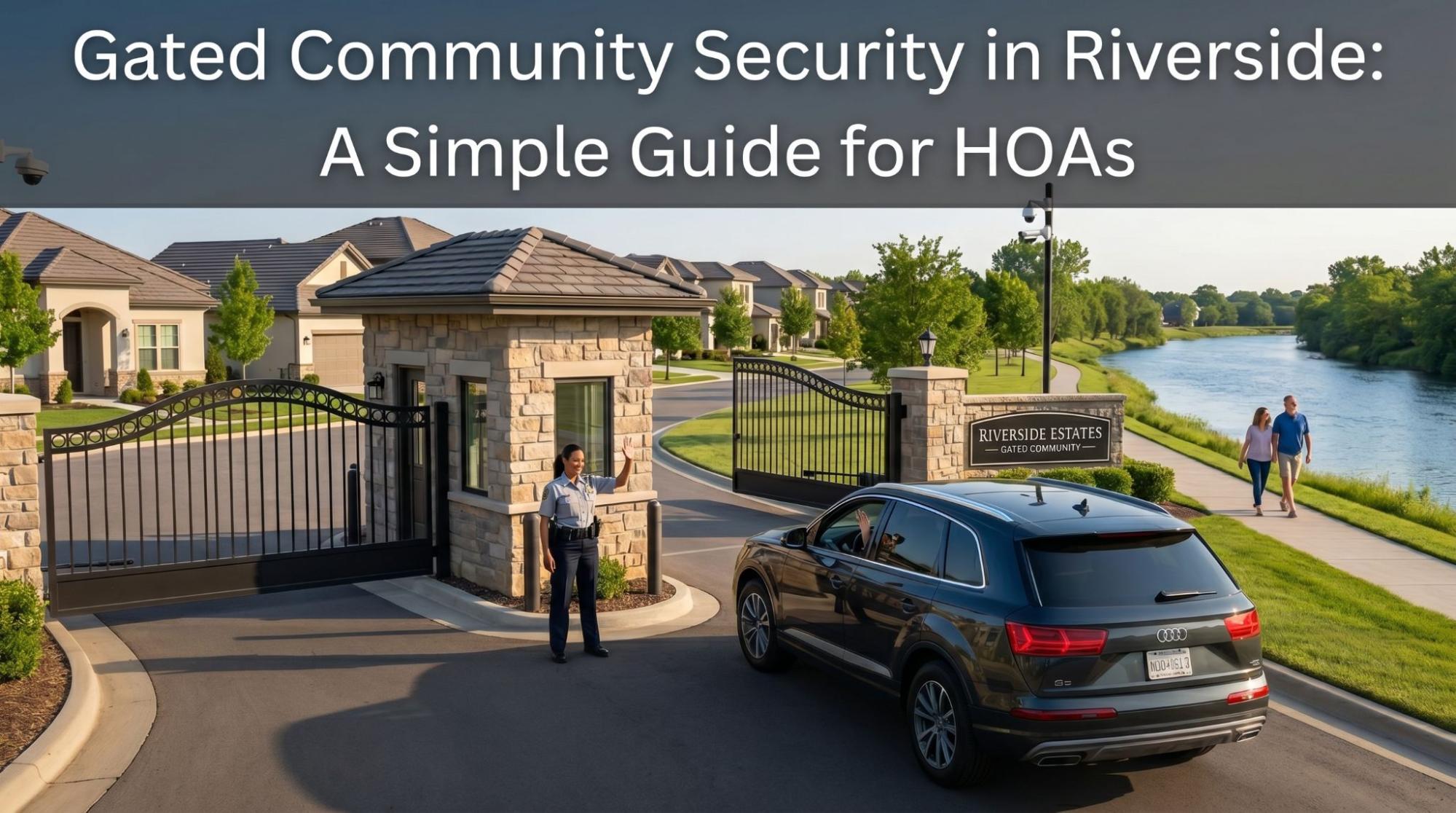

Gated Community Security in Riverside: A Simple Guide for HOAs
If you sit on an HOA board in Riverside, you already know that “security” means something different depending on who’s asking. Residents want to feel safe walking to the mailbox at night. The board wants liability covered. The property manager wants a vendor who shows up on time and doesn’t generate angry emails. Pulling all three of those into one decision is the hard part, and it’s where a lot of boards get stuck.
This guide walks through what gated community security actually involves in Riverside, what tends to go wrong when boards skip steps, and what a reasonable vetting process looks like before you sign anything.
Why Riverside HOAs Are Asking About This Now
Riverside has grown fast on the residential side. Communities off Victoria Avenue, the Canyon Crest area, Mission Grove, and the newer developments around Orangecrest and the 215 corridor have added gates, clubhouses, and shared amenities that didn’t exist a decade ago. More amenities mean more entry points, more visitor traffic, and more situations a single courtesy patrol car can’t realistically cover.
At the same time, Riverside sits in a part of the Inland Empire where warehouse and logistics growth along the 60 and 91 freeways has pulled more vehicle and foot traffic through residential-adjacent areas than boards planned for years ago. None of this means a neighborhood is unsafe. It means the old assumption, a locked gate and a sign-in sheet are enough, doesn’t always hold up the way it used to.
Boards are also under more scrutiny than they used to be. If an incident happens on association property and a resident later argues the board knew about a recurring problem and did nothing, that’s a liability conversation nobody on a volunteer board wants to have. A documented, consistent security plan is part of how boards protect themselves, not just their residents.
What “Gated Community Security” Actually Covers
The term gets used loosely, so it helps to separate it into pieces:
Gate and access management. Checking visitors in, managing vendor and contractor access, and keeping the gate log accurate enough to mean something if you ever need to pull it.
Patrol coverage. Either a guard stationed at a primary entrance or a mobile patrol that circulates through the community on a set or randomized schedule, checking common areas, pool gates, and parking lots.
Parking and rule enforcement. This is bigger than people expect. Unauthorized parking, fire lane blocking, and guest parking disputes generate more board complaints in most communities than actual security incidents do.
Incident response and documentation. What happens when something does go wrong, a trespasser, a dispute between neighbors, a maintenance worker who shouldn’t be on-site after hours? Good coverage means there’s a guard trained to respond calmly and a written record afterward, not just a verbal account three weeks later when someone files a complaint.
If your community is weighing residential security services, it’s worth getting specific about which of these four pieces is actually your problem. A community with a theft issue in the parking structure needs different coverage than one dealing with constant guest-pass arguments at the gate.
The Vetting Checklist Most Boards Skip
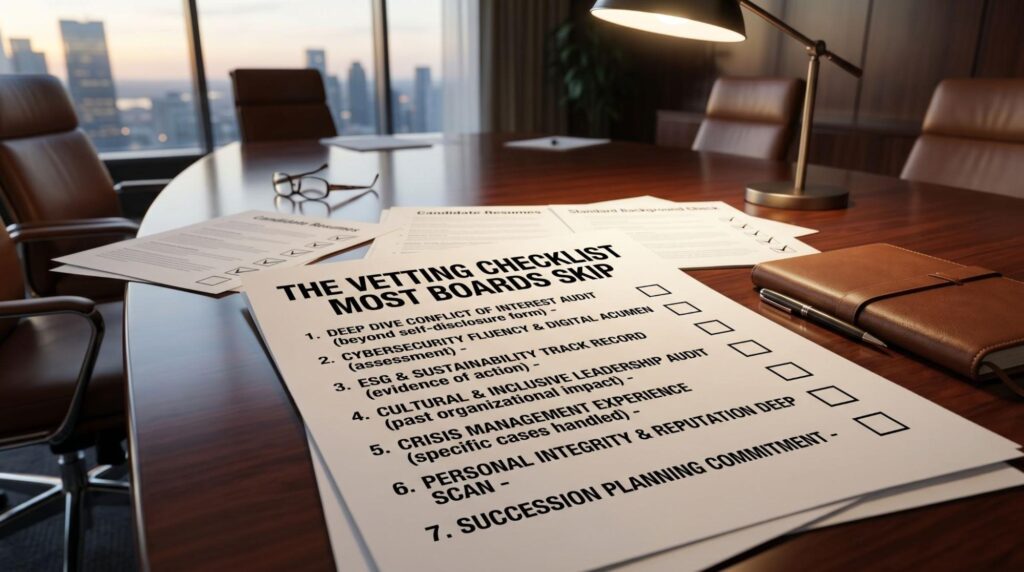
A lot of HOA security decisions get made on price and a sales call. That’s how boards end up locked into a year-long contract with a guard who shows up inconsistently and a company that’s hard to reach when something happens at 2 a.m.
Before signing anything, a board should be able to answer these:
- Is the company licensed as a Private Patrol Operator through California’s Bureau of Security and Investigative Services (BSIS), and can they provide the license number?
- Do they carry general liability insurance, and will they send a certificate naming the HOA?
- What’s the actual screening process for guards, background checks, drug testing, documented training, not just “we vet everyone”?
- How are patrol checks logged? Paper sign-in sheets disappear. GPS-stamped or app-based check-ins don’t.
- Who do you call if a guard doesn’t show up for a shift, and how fast is the replacement?
- Is the contract month-to-month, or are you locked in regardless of performance?
That last point matters more than boards usually weigh it. A management company juggling a dozen properties shouldn’t be stuck in a 12-month agreement with a vendor that isn’t working out. Security guard services in Riverside should come with enough flexibility that the board isn’t trapped if the fit is wrong.
Budgeting for Security Without Blowing Up Your Reserves
Boards almost always ask the same question first: how much does this cost? The honest answer is that it depends heavily on coverage type. A single guard posted at a main gate for 12 hours a night costs significantly more than a mobile patrol that circulates through a community a handful of times per shift. Most mid-sized gated communities in Riverside land somewhere between those two models, a patrol-based plan with the option to add a stationed guard during high-traffic hours like weekend evenings or move-in season.
A few cost-control habits that work in practice:
Start with patrol coverage and add a stationed post only if there’s a specific entrance or time window driving the need. Don’t pay for 24-hour gate staffing if the real problem is Friday and Saturday nights. Review the contract scope every six months instead of letting it auto-renew untouched; the community needs change as occupancy and amenities change, and the security plan should change with them.
Parking Enforcement Is Usually the Real Pain Point
Ask most Riverside HOA board members what generates the most resident complaints, and it’s rarely a security incident; it’s parking. Guest spots taken by residents’ second cars, fire lanes blocked during move-ins, and commercial vehicles parked overnight in violation of CC&Rs.
This is where a lot of boards get the enforcement piece wrong. Towing without proper signage and notice procedures under California Vehicle Code 22658 can expose the HOA to disputes and even reimbursement claims if it’s not done correctly. A security or patrol provider that understands parking enforcement compliance, proper signage, documented warnings, and coordination with a licensed towing partner saves the board from becoming the target of those disputes itself.
Climate and Access Realities Specific to Riverside
Riverside’s fire season isn’t an abstract risk for gated communities near the foothills or open space. Riverside County issues evacuation guidance during red flag conditions most years, and communities with a single controlled gate need a plan for what happens to that gate during an evacuation order. A patrol team that knows the property can open access points quickly and help direct traffic during an evacuation, which a locked, unmanned gate cannot do on its own.
Heat is the other factor. Summer temperatures regularly push past 100 degrees in Riverside, and that affects everything from how long a guard can reasonably stand post outdoors to when vehicle break-ins and trespassing tend to spike, usually evening hours once the heat breaks, not midday.
What Good Coverage Looks Like Day to Day
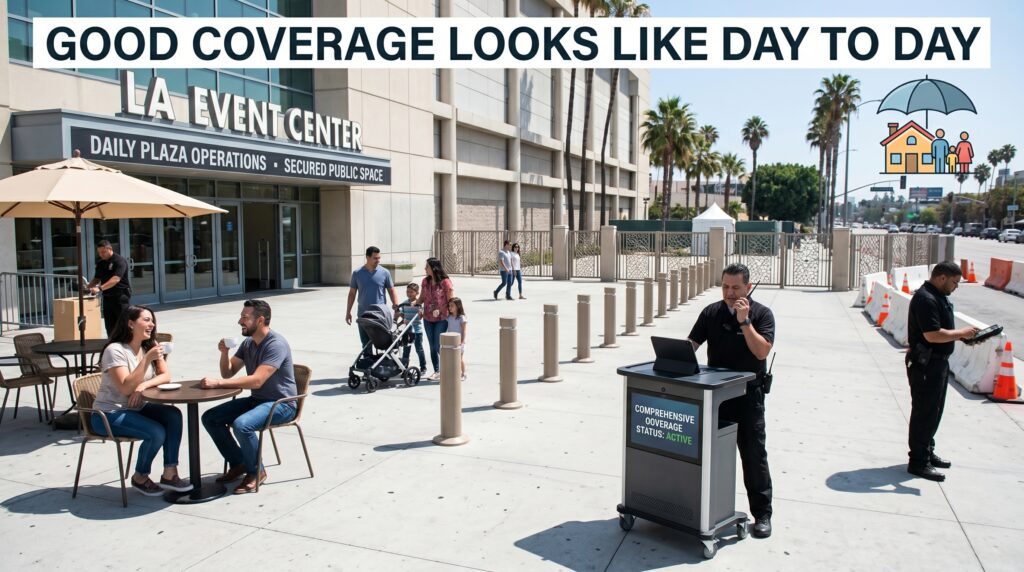
A well-run gated community security plan in Riverside is boring in the best way. Guards know the residents on sight within a few weeks. Visitor logs are consistent enough that the property manager can actually pull a report if something comes up. Patrol routes cover the pool, the mail kiosk, and the guest parking areas, not just a drive past the main gate. And when something does happen, there’s a written incident report within hours, not a verbal recap at the next board meeting.
That consistency is the actual product. Anyone can post a guard at a gate. Few providers can keep that guard trained, supervised, and accountable for a year without the board having to manage it themselves.
Getting Started: What to Bring to the First Call
If your board is ready to get quotes, the process moves faster when you walk in with a few things ready: your community’s gate hours and entry points, your current pain point (parking, trespassing, vandalism, gate-jumping), your CC&R parking and visitor rules, and a rough sense of budget range. A provider that’s worth hiring will ask these questions before quoting a number, not after.
If you’re ready to put a plan together for your community, reach out to our team, and we’ll walk through your property’s layout and build a coverage plan around it, not a generic package.
FAQs
How much does HOA security cost in Riverside?
Cost depends on coverage type. Mobile patrol that circulates through a community several times per shift typically costs less than a guard stationed full-time at one gate. Most mid-sized gated communities use a hybrid plan and adjust hours seasonally based on actual need.
Do HOAs need licensed security guards in California?
Yes. Any company providing contracted security guards or patrol services in California must hold a Private Patrol Operator license through BSIS, and individual guards must complete the required training. Boards should always confirm license numbers directly with a provider before signing a contract.
Can security guards enforce parking rules in a gated community?
Security and patrol providers can support parking enforcement, including documenting violations and coordinating with licensed towing partners, but towing must follow California Vehicle Code 22658 requirements around signage and notice. A provider familiar with these rules helps the HOA stay compliant.
What’s the difference between a security guard and a courtesy patrol?
A courtesy patrol typically does periodic drive-through or walk-through checks without a stationed presence, while a security guard is posted at a fixed location, like a main gate, for a set shift. Many Riverside communities combine both, patrol for general coverage, with a stationed guard added during higher-traffic hours.
How do I get a security quote for my Riverside HOA?
Reach out with your community’s gate hours, entry points, and current concerns, whether that’s parking, gate-jumping, or after-hours activity. A provider should walk through your property’s layout before quoting, since coverage built around your actual risk points works better than a one-size package. Contact FlagGuard to start that conversation.