

Medical Facility Security in San Diego: Managing Emergency Room (ER) Foot Traffic
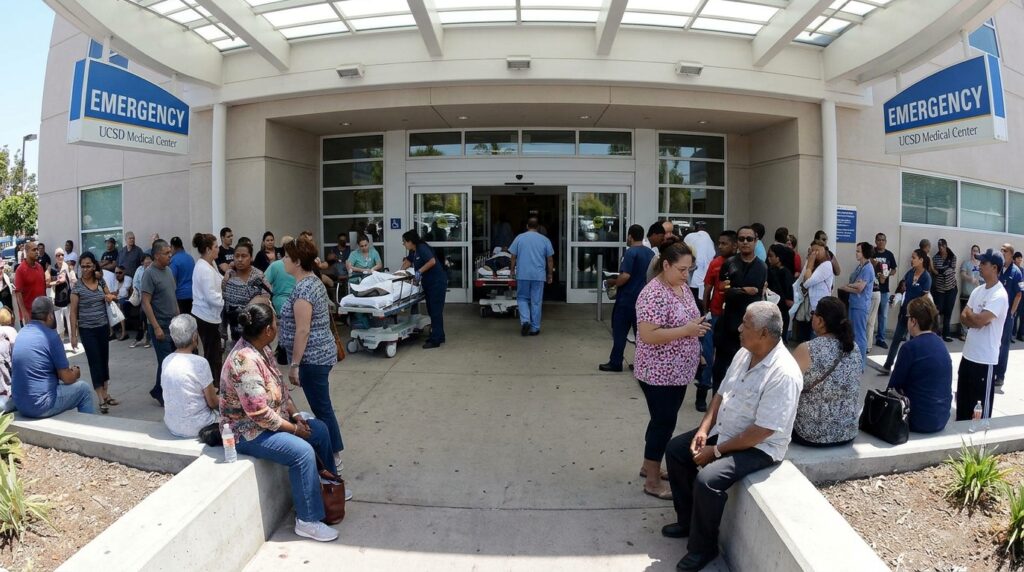
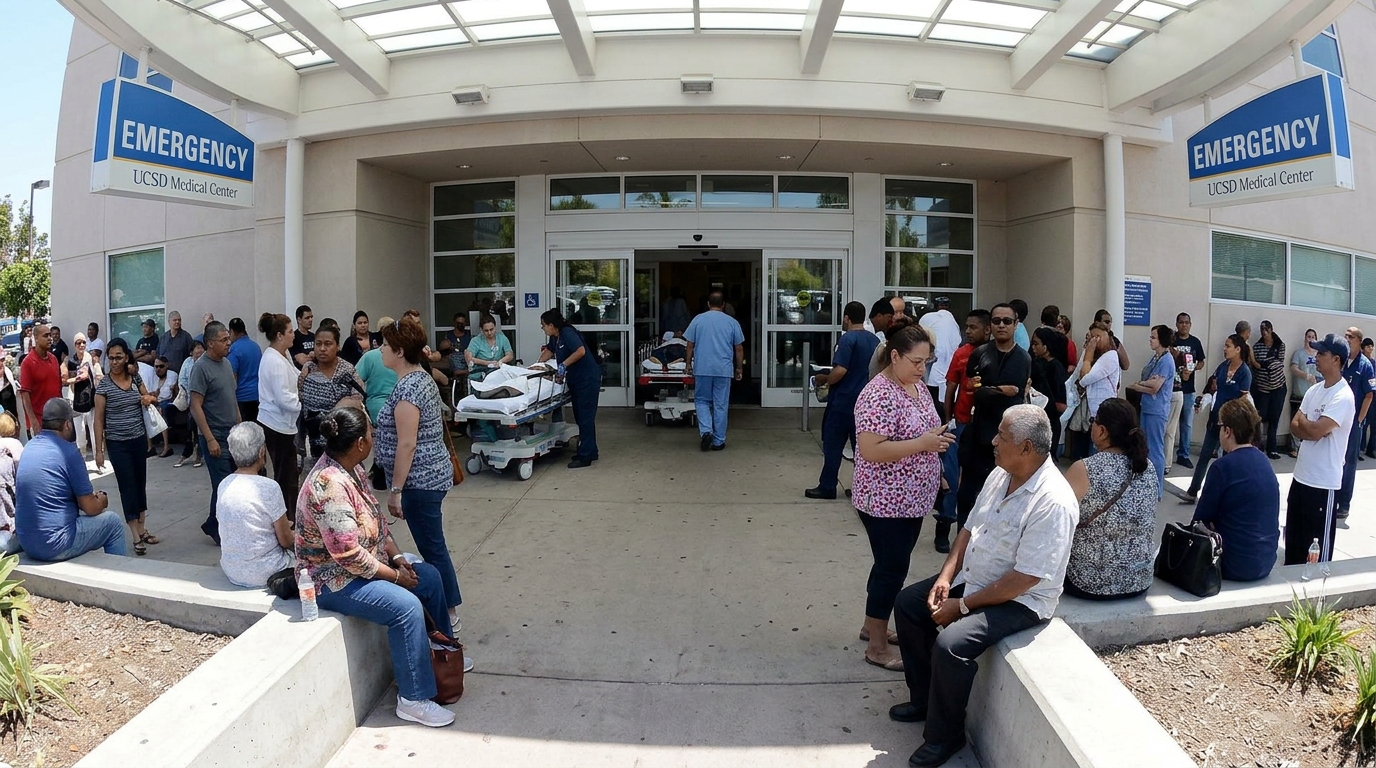
A slow Tuesday afternoon in an ER waiting room looks nothing like a Friday night after last call. One minute it’s a handful of patients filling out intake forms. The next, it’s a psychiatric hold pacing by the vending machines, a family arguing with triage over wait times, and an ambulance bay backing up because there’s nowhere to park the gurney. This is the reality for hospitals and urgent care centers across San Diego, and it’s exactly the kind of environment that generic building security was never designed to handle.
Front desk staff and clinical teams aren’t trained for de-escalation, restraint, or reading a room before it turns. That’s a different job. It’s why more San Diego facilities, from large hospital systems to standalone urgent care clinics, are bringing in dedicated hospital security guard services instead of leaning on cameras and a locked door.
Why ER Waiting Rooms Are a Different Kind of Risk
Retail stores worry about shoplifting. Office buildings worry about tailgating through a badge reader. Emergency rooms deal with something harder to script: people in crisis, often in pain, often frightened, sometimes under the influence, and rarely at their calmest. Add long wait times during flu season or a mass casualty event, and you’ve got a room that can shift from quiet to volatile in under a minute.
This isn’t unique to San Diego, but the city’s mix of dense urban hospitals and sprawling suburban clinics creates its own version of the problem. A facility near Hillcrest or downtown deals with a different patient population and different foot traffic patterns than one out in Escondido or Chula Vista. Hospital security services built around a one-size-fits-all patrol schedule tend to miss both ends of that spread.
What Good Medical Facility Security Actually Looks Like
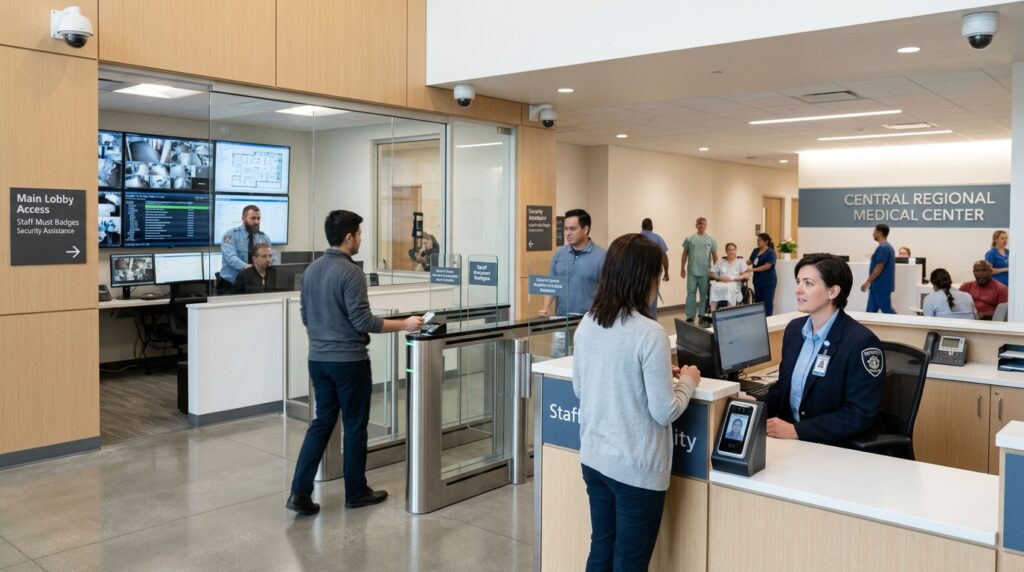
A hospital guard stationed at the wrong post is just a body in a uniform. Effective coverage means guards who understand triage flow, know how to spot escalation before it becomes physical, and can coordinate with clinical staff without getting in their way. That includes:
- Ambulance bay control, so unauthorized vehicles and foot traffic don’t block emergency access
- Waiting room presence during peak hours, particularly evenings and weekends
- Support during behavioral health holds, working alongside, not instead of, clinical staff
- Visitor screening at entry points, especially after-hours when fewer staff are on site
- Coordination with local law enforcement when a situation exceeds what unarmed personnel should handle
That last point matters. Not every ER incident calls for police, but some do, and a guard who knows the difference, and who has a working relationship with San Diego PD or the relevant local precinct, saves precious minutes.
Armed vs. Unarmed: What San Diego Facilities Actually Need
This is one of the most common questions facility managers ask, and the honest answer is: it depends on the site. A pediatric outpatient clinic in a quiet neighborhood has different exposure than a Level I trauma center downtown. Armed security guards in San Diego make sense for higher-acuity ERs and facilities with a documented history of weapons incidents or behavioral health emergencies. Smaller clinics and outpatient offices often do fine with well-trained unarmed officers who focus on presence, de-escalation, and rapid escalation protocols.
The California BSIS (Bureau of Security and Investigative Services) licenses and regulates both categories, and any legitimate provider offering armed security in San Diego should be able to show you current licensing without hesitation. If they can’t, that’s a red flag worth walking away from.
Coverage That Matches How Hospitals Actually Run
Hospitals don’t close. Neither should the security plan. A lot of facilities make the mistake of scaling coverage down overnight, right when staffing is thinnest, and the ER is often busiest with intoxication cases, injuries, and crisis walk-ins. Real security guard services in San Diego for medical settings should scale coverage to patient volume, not the clock, meaning more visible presence during known peak windows (weekend nights, holidays, extreme heat days when ERs see spikes) and steady baseline coverage the rest of the time.
This is also where FlagGuard’s broader medical facility security services come in, built specifically around healthcare environments rather than adapted from retail or office protocols.
Local Context: Why San Diego’s Medical Corridor Needs a Tailored Approach
San Diego’s healthcare footprint is spread across some very different environments. The Kearny Mesa medical corridor along the 163 and 805 freeways is dense with outpatient clinics and specialty offices. Downtown and Hillcrest host larger hospital systems with heavier ER volume. North County facilities in places like Escondido and Vista serve a more suburban, spread-out patient base with different traffic patterns entirely.
Climate plays a role too; San Diego doesn’t get brutal winters, but heat events and wildfire smoke days reliably drive up ER visits, and facility managers who’ve been through a few of those spikes know exactly what that does to a waiting room. A security plan that accounts for these local rhythms, rather than a generic template, is the difference between guards who blend into the routine and guards who are actually useful when things get busy.
For facilities weighing broader coverage across the region, it’s worth reviewing FlagGuard’s San Diego security services alongside the medical-specific offering, since many hospital campuses also need coverage for parking structures, administrative buildings, and satellite clinics beyond just the ER.
Why Guards, Not Just Cameras
It’s tempting to think a strong camera system solves the problem. Cameras document what happened. They don’t stop a confrontation from escalating in real time, and they can’t physically de-escalate a patient in crisis. FlagGuard covered this tradeoff in more depth in a related post on security guards versus alarm systems, which makes the same core point that applies here: technology supports a security plan; it doesn’t replace the judgment of a trained person standing in the room.
The same logic that applies to front desk visitor policy at a corporate office applies at an ER intake desk, just with higher stakes and less predictable behavior on the other side of the counter.
Getting Coverage Right for Your Facility
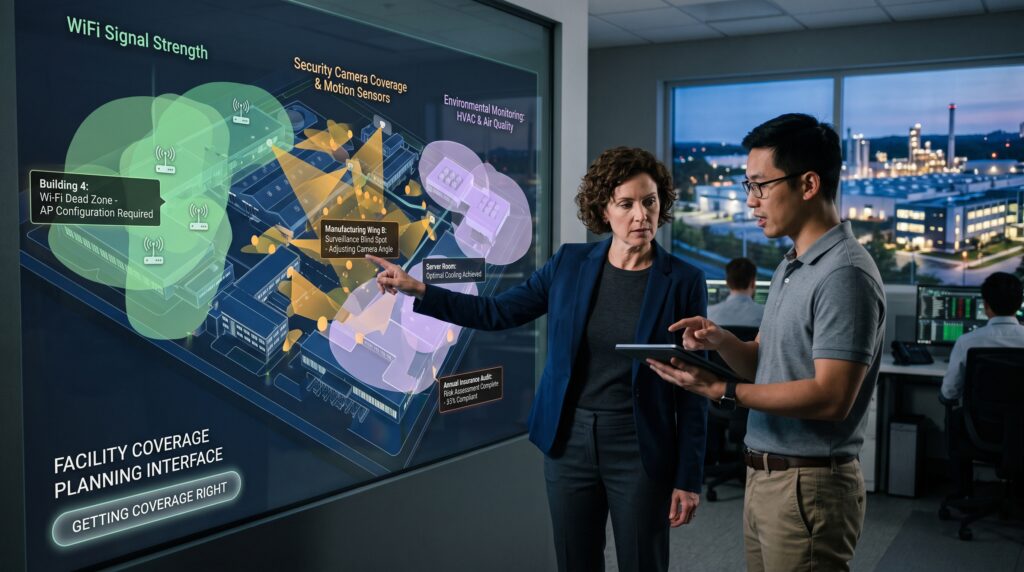
Every hospital, clinic, and urgent care center in San Diego has a different risk profile based on location, patient volume, and the population it serves. A downtown trauma center and a suburban outpatient clinic shouldn’t be running the same security playbook, and a provider that tries to sell you one is cutting corners.
If you’re evaluating hospital security guard services for your facility, start with an honest look at your peak hours, your history of incidents, and whether your current coverage, if you have any, actually matches when things get difficult rather than just when the budget allows for it.
FlagGuard works with hospitals, clinics, and medical office buildings across San Diego County to build coverage plans around actual patient flow instead of guesswork. Get in touch with our team to talk through what your facility needs.
5. FAQs
Do hospitals need armed security guards?
Not always. It depends on the facility’s size, patient population, and incident history. Level I trauma centers and busy urban ERs often benefit from armed coverage, while smaller outpatient clinics may only need well-trained unarmed officers focused on de-escalation and visitor screening.
How much does hospital security cost in California?
Cost varies by coverage hours, whether guards are armed or unarmed, and facility size. Pricing is typically quoted per hour based on a site assessment rather than a flat rate, since a 24/7 downtown ER and a part-time outpatient clinic have very different staffing needs.
Can security guards remove patients from an ER?
Security guards can escort or restrain a patient only within the limits set by hospital policy and California law, and typically only when a patient poses a safety risk. Actual removal decisions are usually made jointly with clinical and administrative staff, not by security alone.
What’s the difference between hospital security and hiring off-duty police?
Licensed security guards are trained specifically for facility operations, de-escalation, and coordination with clinical staff, and they’re on-site consistently. Off-duty police officers bring arrest authority but aren’t always available for daily coverage and typically cost more per hour.
How do I get a security coverage plan for my San Diego medical facility?
The best starting point is a site assessment that looks at your patient volume, peak hours, and any past incidents. Contact FlagGuard to schedule one and get a coverage plan built around your facility’s actual traffic patterns.