
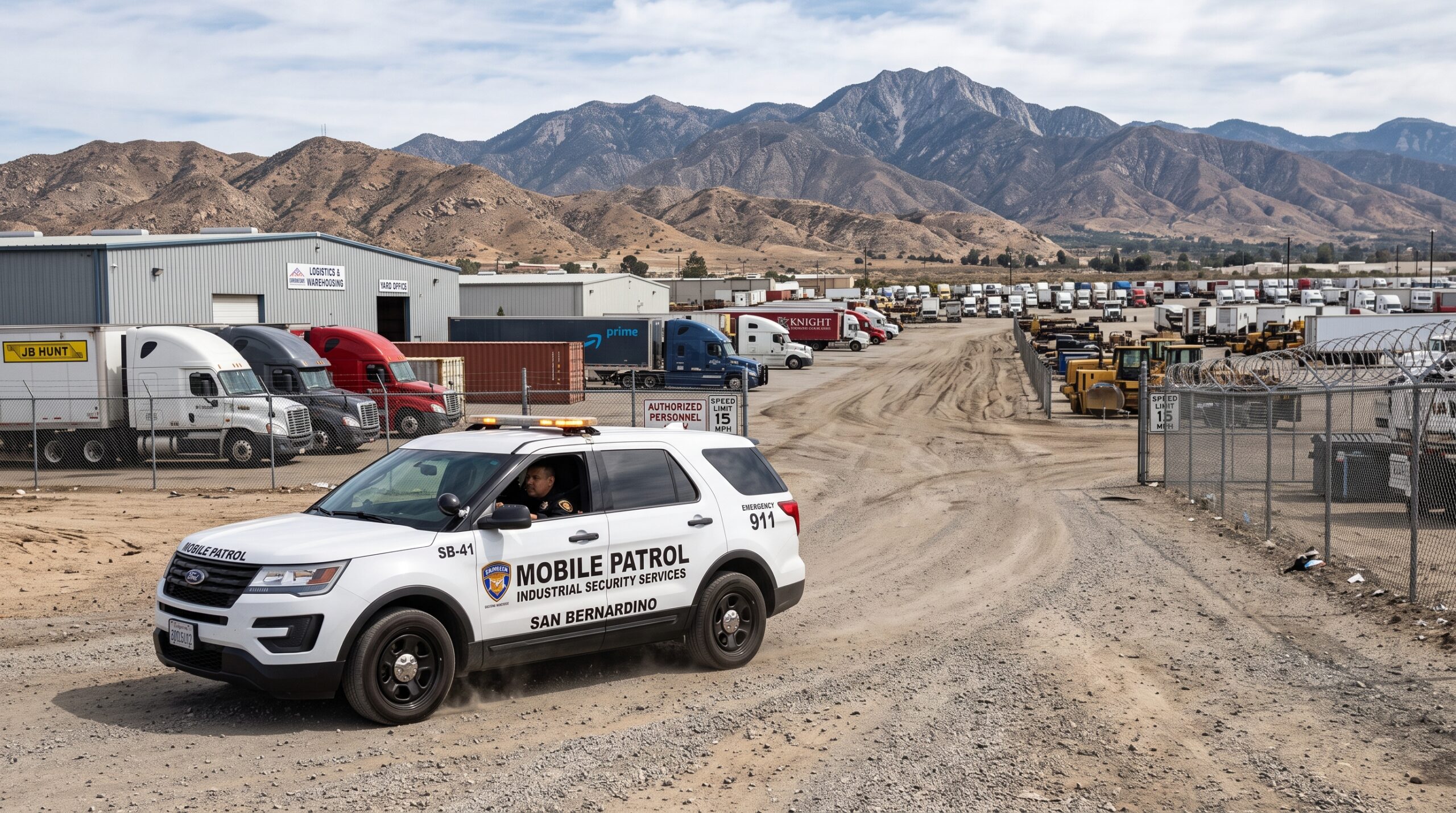

Mobile Patrol for Industrial Yards in San Bernardino
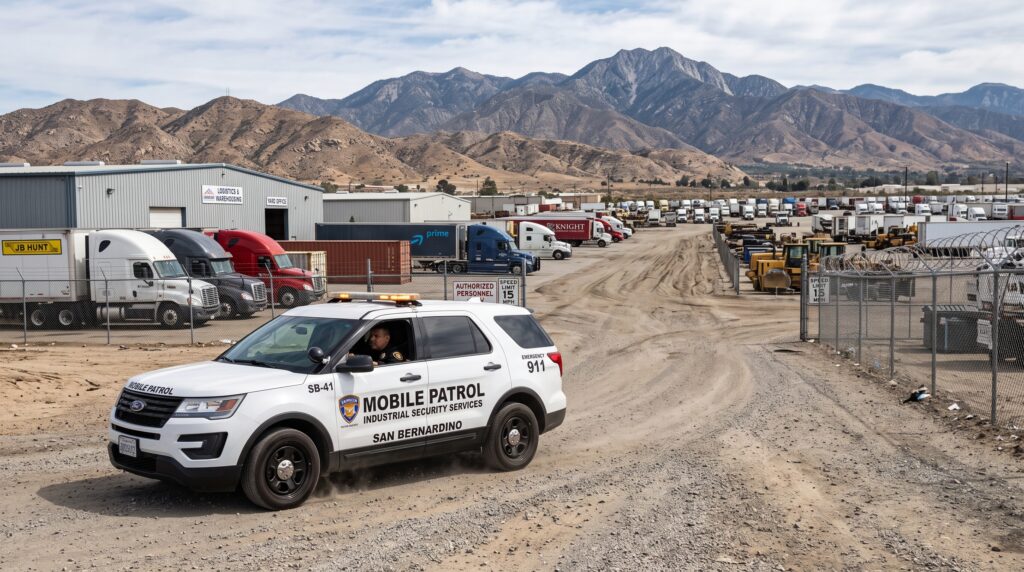
Drive along Tippecanoe Avenue or down Waterman near the rail yards on a Friday night, and you’ll notice something: the trucks stop moving, the office lights go dark, and the gates close. That’s exactly when a lot of industrial theft happens. Not during the day, when there’s traffic and eyes on the yard, but in that long stretch between the last shift leaving and the first one arriving Monday morning.
Search for security companies in San Bernardino, and you’ll find no shortage of options, most offering some version of the same thing: a guard, a badge, a patrol car. What actually matters is whether the coverage matches when your risk shows up. For a lot of warehouse and yard operators, that means looking closely at mobile patrol services, not as a cheaper alternative to a guard, but as the right tool for a specific problem.
What Mobile Patrol Actually Looks Like at an Industrial Site
Mobile patrol isn’t a guard standing at a gate. It’s a marked vehicle making scheduled, sometimes randomized rounds across one property or several, checking gates, fence lines, dock doors, parked trailers, and anywhere someone could get in without being seen. The officer gets out, walks the perimeter, tests locks, looks for cut fencing or tire tracks where there shouldn’t be any, and logs what they find.
For a single industrial yard, that might mean four or five checks a night. For an operator managing multiple properties across Ontario, Fontana, and San Bernardino proper, a shared mobile patrol route can cover all of them without stationing a full-time guard at each one. That’s the real advantage: coverage that scales with your footprint instead of multiplying your headcount.
FlagGuard builds these routes around the actual site, not a generic template. Our industrial security services start with a walk-through of your gates, fence lines, and high-value zones before we ever set a patrol schedule.
San Bernardino County’s Industrial Warehouse Boom Creates a Specific Security Problem
San Bernardino County sits inside one of the largest logistics and distribution corridors in the western U.S. Along the I-10 and I-215 corridors, and stretching toward Fontana, Rialto, and Colton, warehouse and distribution space has grown fast over the past decade, pulled in by rail access, proximity to the ports, and land that’s still cheaper than coastal L.A. County.
That concentration of freight, inventory, and idle trailers is exactly the kind of environment CargoNet and other cargo-theft tracking organizations point to when they discuss Southern California’s Inland Empire as a region worth watching. It’s not that San Bernardino is uniquely dangerous. It’s that density of freight plus long stretches of low-visibility hours creates opportunity, and opportunity is what theft follows.
Add in the region’s heat; summer afternoons routinely push past 100 degrees, and you get another quiet factor: daytime foot traffic around a yard often drops off in the worst heat, and activity shifts toward early morning and late evening. Patrol schedules that account for that pattern tend to catch more than ones built on a generic day-shift assumption.
Mobile Patrol vs. On-Site Security Guards: Which Fits Your Yard
This is the question most operators actually need answered, and it doesn’t have a one-size answer.
On-site security guards make sense when a yard has constant activity, trucks in and out around the clock, visitors who need to be verified in person, or high-value inventory that justifies a dedicated post. A guard standing at a gate can stop a problem before it starts, verify a driver’s credentials on the spot, and respond immediately if something looks wrong.
Mobile patrol makes more sense when the risk is concentrated in specific hours, nights, weekends, shift-change windows, rather than spread evenly across 24 hours. It also fits operators managing several smaller sites where a full-time guard at each one isn’t practical or affordable.
A lot of the industrial yards we work with in San Bernardino County end up using both: a guard during active shipping hours, mobile patrol overnight and on weekends. It’s less about picking a winner and more about matching coverage to when your actual risk shows up.
What a Mobile Patrol Officer Checks on Every Round
A patrol that just drives past the front gate isn’t doing much. A useful one follows a defined route with specific checkpoints:
Gate and fence-line integrity gets checked first, since that’s the most common entry point for anyone trying to get onto a property they shouldn’t be on. Loading dock doors and trailer seals get a visual pass, especially on trailers left overnight. Parking areas and equipment yards get walked, not just driven past, because vehicle break-ins and equipment tampering are easy to miss from a car window. Lighting is tested, and any outages get flagged immediately, since dark corners are where most incidents cluster. And every round gets logged: time, findings, and anything that needs follow-up, so there’s a documented record, not just a guard’s word that they showed up.
That documentation matters more than people expect. When there’s an insurance claim, a dispute with a tenant, or a question from ownership about whether coverage is actually happening, a timestamped patrol log settles it fast.
The Overnight and Weekend Gap Mobile Patrol Closes
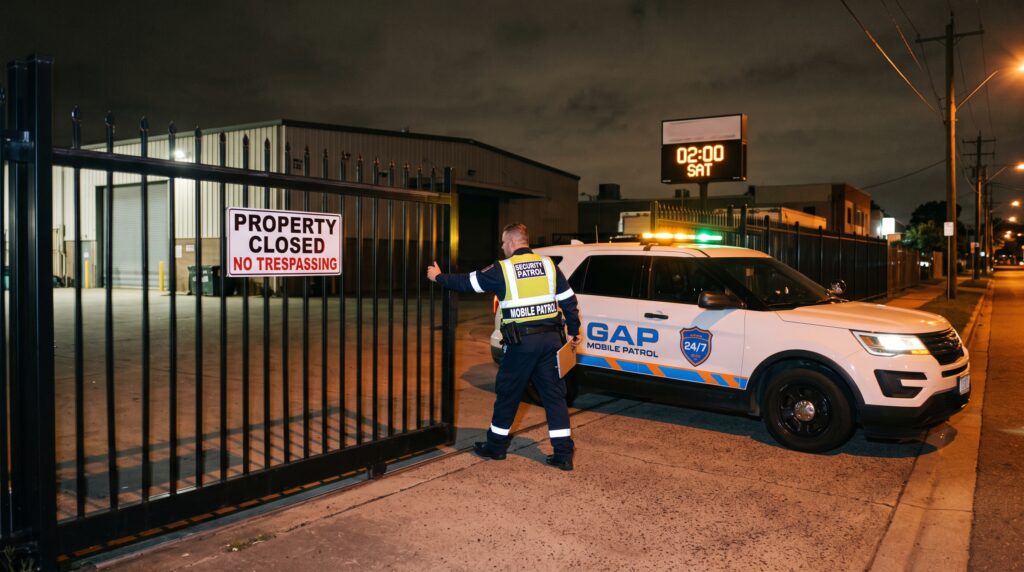
Here’s the pattern we see most often in San Bernardino County: a yard runs full shifts Monday through Friday, activity tapers off Saturday afternoon, and by Sunday the property sits mostly empty until Monday’s first shift. That 36- to 48-hour window is where a lot of incidents happen, precisely because it’s the least-watched stretch of the week.
We’ve written before about how theft patterns often show up before management ever notices them, small things like a cut lock that gets re-secured, or a section of fence pushed just far enough to slip through. A guard on a fixed daytime post won’t catch that. A mobile patrol running scheduled overnight and weekend checks often will, simply because it’s looking at the right hours.
If you’re weighing whether your current setup has a blind spot, ask a simple question: does anyone physically check this property between Friday evening and Monday morning? If the answer is no, that’s the gap mobile patrol is built to close.
What to Look for in Security Companies in San Bernardino
Not every provider offering mobile patrol services is built the same, and the differences matter more than the sales pitch usually lets on. Among security guard companies in San Bernardino, the gap between a good operator and a mediocre one usually shows up in three places: licensing, documentation, and route flexibility.
Licensing is the baseline. In California, a legitimate security company operates under a PPO license issued by the Bureau of Security and Investigative Services, and every officer should be background-checked and trained before they’re assigned to your site. Ask to see the license number; it’s public information, and any real operator will hand it over without hesitation.
Documentation is next. A patrol that can’t show you when it actually ran isn’t much better than no patrol at all. Look for real-time reporting, GPS-verified check-ins, timestamped logs, photos where relevant, not just a monthly summary that says “everything was fine.”
Route flexibility matters too. Your risk isn’t static. Shipment volume changes seasonally, construction next door changes sightlines, and a route built a year ago might not reflect your yard today. A company willing to walk the site with you and adjust the route as conditions change is worth more than one running the same loop on autopilot.
And finally, contract terms. Long-term lock-ins make sense for some services, but for mobile patrol, flexibility to scale coverage up during peak shipping season or down during slower months is usually more useful than a rigid annual contract.
FlagGuard operates under California PPO License No. 122256, and our San Bernardino County security services are built around exactly this kind of site-specific, documented approach. Among security companies San Bernardino operators actually call back, it’s usually the ones that show up with a plan for your specific gates and shift schedule, not a template pulled off a shelf.
Ready to Close the Gaps in Your Coverage?
If your industrial yard has hours nobody’s watching, that’s worth fixing before it turns into an incident report. Reach out to our team, and we’ll walk your site, look at your current schedule, and put together a mobile patrol plan built around when your risk actually shows up.
FAQs
What is mobile patrol security?
Mobile patrol security uses a marked vehicle and trained officer to check a property on a scheduled route rather than staffing a fixed post. The officer walks gates, fence lines, and high-value areas, checks for signs of tampering or entry, and logs each round with a timestamp.
Is mobile patrol enough for a large industrial yard, or do I need on-site security guards too?
It depends on when your risk is concentrated. If activity is steady around the clock, on-site security guards add real value; if the risk is mostly overnight and weekend hours, mobile patrol can cover that gap on its own or alongside a daytime post.
How much does mobile patrol security cost in San Bernardino County?
Pricing depends on route frequency, number of properties covered, and hours needed, so there isn’t a single flat rate. The most accurate way to get a number is a site walk-through and a coverage plan built around your yard’s actual layout and schedule.
How often does mobile patrol check a property overnight?
Most industrial routes run multiple checks per shift, spaced to cover the full overnight window rather than clustering visits close together. The exact frequency should be set based on your site’s size, entry points, and risk periods.
How do I hire a security guard in San Bernardino, CA for my industrial yard?
Call 818-818-8111 or contact FlagGuard with your property details. We’ll review your gates, shift schedule, and current coverage, then build a mobile patrol or on-site guard plan and get you a quote, usually within a few days.