
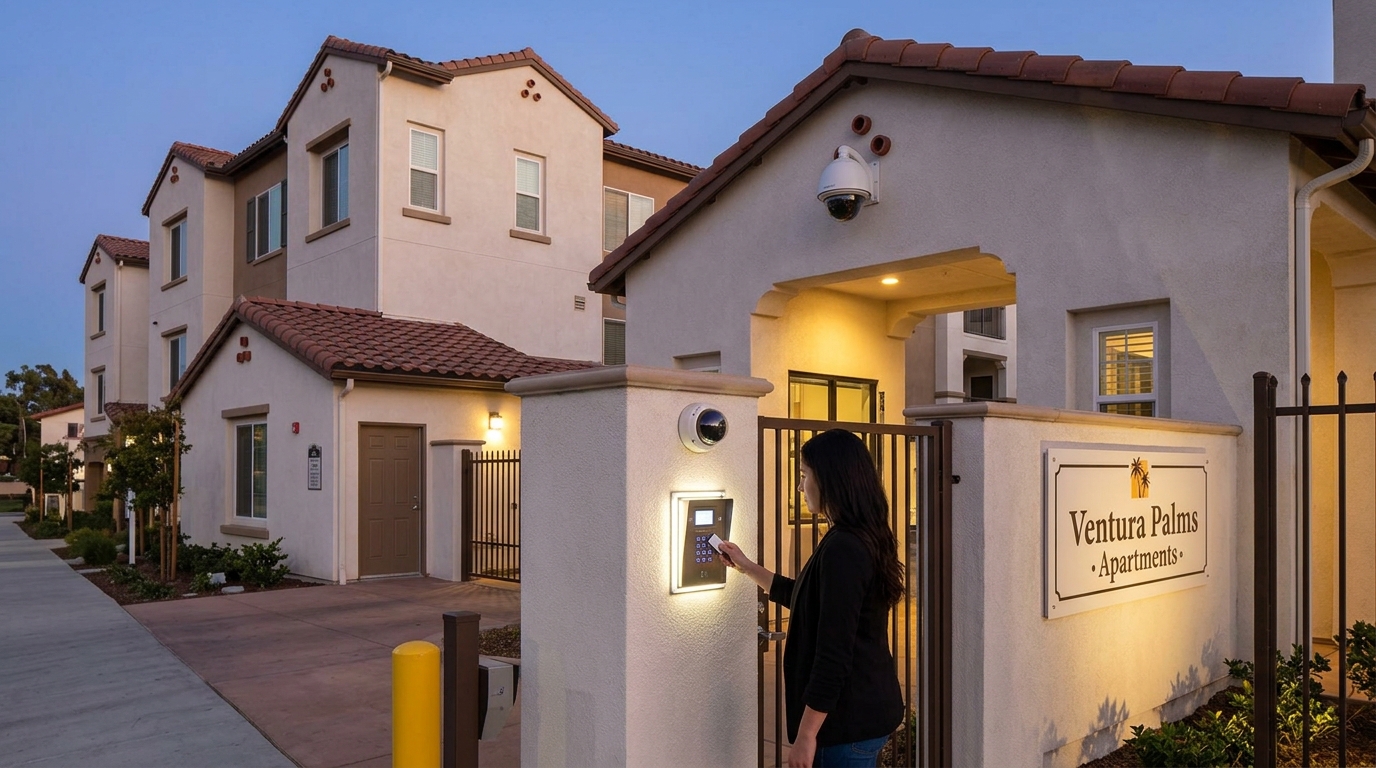

Apartment Complex Security in Ventura: What Tenants Want
Ask a property manager in Ventura what tenants care about, and you’ll usually hear the same three things: parking, noise, and rent increases. Ask the tenants themselves, and security quietly climbs to the top of the list, right after they’ve had a package stolen off their doorstep or watched a stranger walk through an unlocked gate behind someone else.
Ventura’s rental market sits in an unusual spot. You’ve got beach-adjacent complexes near the Ventura Pier and C Street surf break where short-term visitors and long-term residents share the same parking lots. You’ve got denser multifamily buildings along Telegraph Road and in Midtown, and quieter garden-style communities out toward Saticoy and Montalvo. Each has a different security problem, but the underlying question from tenants is the same: does anyone actually notice if something’s wrong here?
Gate Access Is the First Thing Tenants Judge
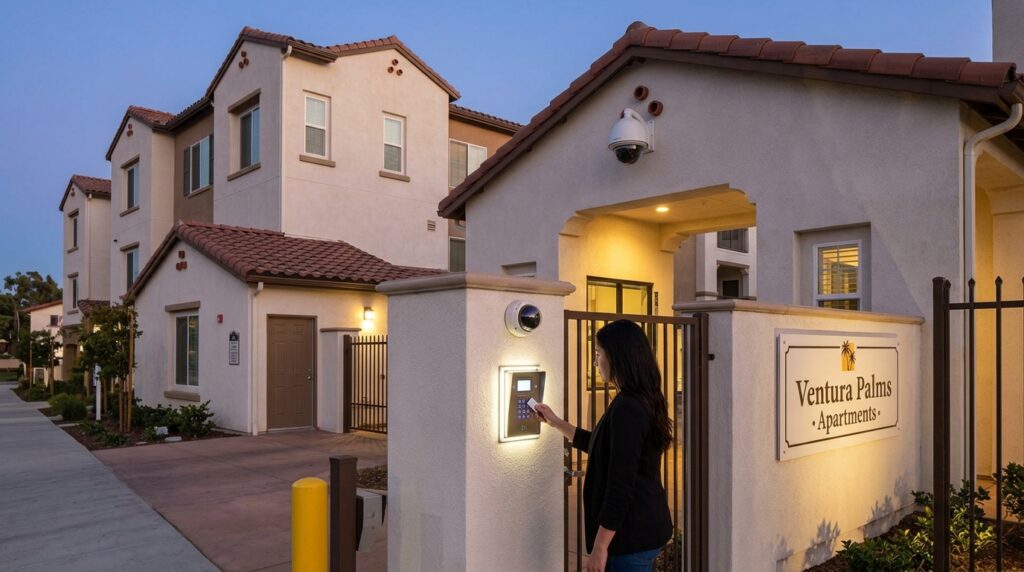
Before a renter ever asks about square footage or the pool schedule, they’re watching how the front gate behaves. Does it close behind the car in front of them, or does it sit open for the next ten minutes? Tailgating through a pedestrian or vehicle gate is the single most common way unauthorized people end up on a property, and it’s also the fastest thing a prospective tenant notices during a walkthrough.
This is where a live presence beats a keypad. A code can be shared, guessed, or left taped to a wall by a maintenance crew. A guard checking credentials, greeting residents, and closing the loop on visitor access does something a call box never will: it makes people behave differently because someone’s watching. FlagGuard’s residential security services are built around exactly this kind of access control, tailored to a property’s specific entry points rather than a generic patrol schedule.
It’s worth noting that gate problems rarely show up in a leasing office’s incident log. Tenants don’t file a report every time someone tailgates them in; they just notice, mention it to a neighbor, and quietly decide whether to renew. By the time a manager hears about it, it’s usually from a resident who’s already looking at other buildings.
Package Theft Is a Bigger Deal Than Most Leases Admit
Ventura’s rise in online shopping has turned mail rooms and cluster boxes into one of the most complained-about problems in multifamily housing. A single unlocked package room or a cluster box left open by a delivery driver in a hurry can turn into a magnet for opportunistic theft, and it doesn’t take many incidents before a resident thread on a community app turns into a pattern of complaints property managers can’t ignore.
Guards patrolling on a set schedule catch this in a way cameras alone don’t. A camera records the theft; a guard walking the mail area at the right time of day prevents it. Some communities pair a guard with a locked parcel locker system, which cuts down on where theft can even happen in the first place. Either way, tenants notice whether packages arrive intact far more than they notice most other security measures, simply because it happens to almost everyone eventually.
Lighting and Cameras Take More Abuse Near the Coast
Ventura’s marine layer and salt air aren’t just a climate quirk; they’re a maintenance problem. Camera housings corrode faster within a mile or two of the coast, motion-sensor lights fail sooner, and gate hardware sticks in the damp mornings common along the harbor and lower Ventura Avenue. Tenants don’t care why a light is out; they just notice that it is, and it changes how safe they feel walking to their car after a late shift.
Technology helps, but it isn’t self-maintaining. A community that pairs cameras with an actual person checking that equipment works, not just installing it once and forgetting it, sends a very different signal than one running on hope and a two-year-old system. Communities looking at both approaches side by side may find our post on security guards versus alarm systems useful, since the tradeoffs apply just as much to gated apartment communities as they do to single-family HOAs.
A guard walking the property also catches the small stuff a camera feed misses entirely: a light fixture that’s flickering and about to fail, a gate sensor that’s slightly misaligned, a stairwell bulb that’s been out for three days because nobody submitted a maintenance ticket. None of that shows up as a security incident, but all of it shapes how safe a building feels after dark.
Consistent Patrols Beat a One-Time Walkthrough
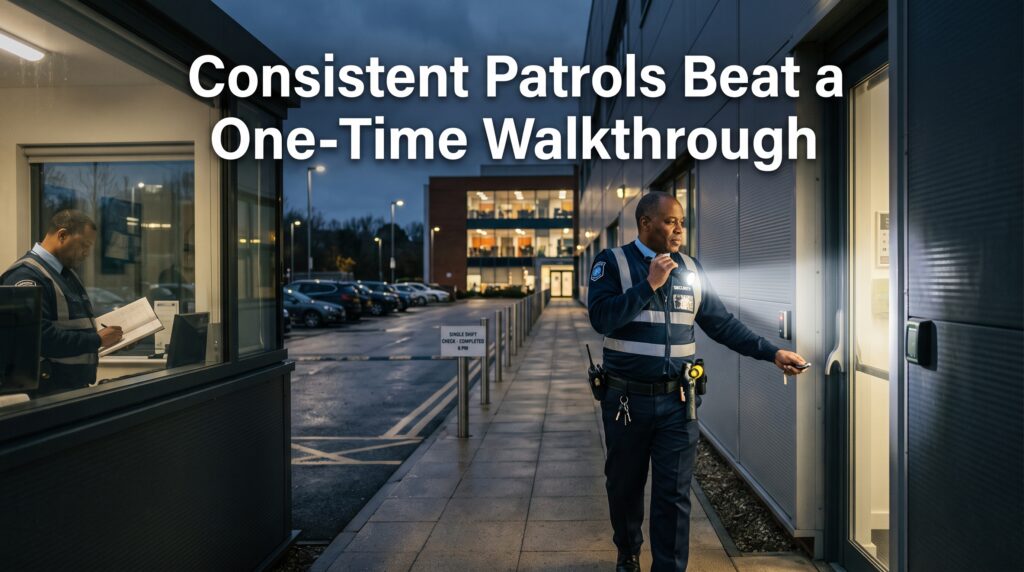
A lot of complexes bring in security after an incident- a car break-in, a fight in the parking lot, a package theft ring working the mail cluster boxes. The guard shows up for a week or two, things calm down, and the coverage quietly disappears. Tenants notice that pattern too, and it doesn’t build trust. It tells them security is a reaction, not a standard.
What tenants actually want is boring, in the best sense: the same patrol route, checked at consistent intervals, regardless of whether anything happened last week. That means parking structures, stairwells, laundry rooms, and pool areas get walked on a schedule tenants can (informally) predict, which is often enough on its own to push opportunistic activity somewhere else.
Consistency also matters for a reason that has nothing to do with crime prevention: liability. A documented patrol log, with timestamps and notes, gives a property manager something concrete if a resident ever disputes what happened on a given night. Without that record, it’s one tenant’s account against a gap in the story.
Visitor Policy Should Be Clear, Not Just Enforced
A strict visitor policy that nobody explains is worse than no policy at all; it just creates friction between residents and whoever’s supposed to be enforcing it. Tenants want to know, in plain terms, how guests sign in, whether deliveries need a code, and what happens after hours if someone’s locked out. Front desk and concierge-style coverage handles this well in larger buildings, and the same logic scales down to gated communities with a manned entrance. Our earlier piece on front desk visitor policies covers a lot of the same friction points that show up at apartment gates, just in a different building type.
The properties that handle this best usually put the policy somewhere tenants actually see it: a laminated card at the gate, a line in the welcome email, a quick mention during move-in, rather than burying it in a lease addendum nobody reads until there’s a dispute. A guard on-site can also answer questions in real time, which a printed sign never does.
Seasonal Swings Change What “Enough Coverage” Means
Ventura isn’t a static market. Summer brings more foot traffic near the beach-adjacent complexes, more short-term guests staying with residents, and more cars parked in spots that are usually empty. A patrol schedule built for a quiet February week doesn’t necessarily hold up in July, and tenants in coastal-adjacent buildings tend to notice the difference immediately: more strangers around the pool, more overnight parking disputes, more noise complaints that spill into safety concerns.
A security plan that flexes with the season, rather than staying fixed year-round, tends to hold up better under actual conditions. That might mean adding an extra evening patrol during peak summer weekends or extending gate-monitoring hours when daylight lasts longer, and residents are out later. It’s a small adjustment on paper, but it’s the kind of detail that separates a plan built for a specific property from a generic package applied the same way everywhere.
How Much Does Apartment Security Cost in Ventura County?
This is usually the second question after “does it work,” and the honest answer is that it depends on more than most quotes let on. Hours of coverage, armed versus unarmed guards, whether the property needs one roving patrol or a fixed post at the gate, and the size of the community all move the number. A 40-unit complex with a single entrance costs a lot less to secure than a 300-unit property spanning several buildings and a parking structure.
Rather than guessing at a number that won’t match your actual site, it’s worth getting a quote scoped to your property’s layout and hours. That’s a faster path to a real budget than comparing flat rates between providers with different coverage models.
What to Look for in a Ventura Security Company
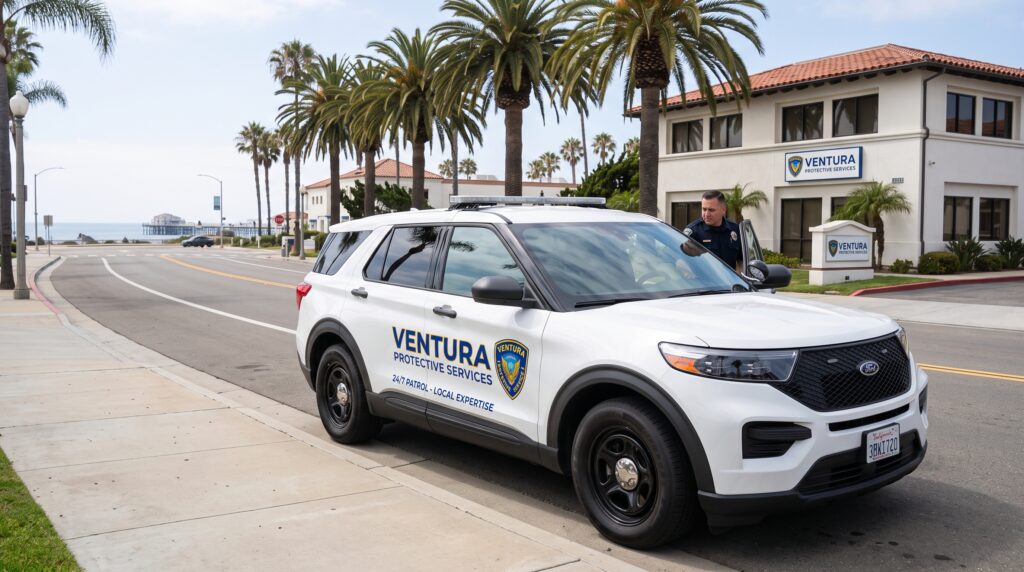
Not every company that shows up in a search for security companies ventura county is licensed the same way, and the difference matters. In California, every guard has to carry a BSIS license, and the company itself needs a PPO license, insurance, and bonding — not just a uniform and a truck. Beyond the paperwork, ask how a company trains guards specifically for residential and multifamily settings, since the skill set for de-escalating a noise complaint is different from patrolling a warehouse.
If you’re comparing private security guard companies for an apartment community, ask direct questions: What does a typical shift report look like? How fast does dispatch respond if a guard flags something? Is coverage flexible enough to scale up during summer, when Ventura’s beach proximity brings more foot traffic and short-term guests into otherwise quiet residential areas?
It also helps to ask how a company handles turnover. Multifamily properties do better with guards who stick around long enough to recognize residents by name and notice when something’s off; a rotating cast of unfamiliar faces at the gate undermines a lot of the trust a consistent presence is supposed to build in the first place.
Give Your Tenants Something to Notice
Security that works doesn’t usually make headlines; it just means residents stop mentioning the thing that used to bother them. A gate that actually closes. A guard who knows names. A patrol that shows up whether or not anything happened last night. That’s what keeps renewals coming and keeps a bad review from ever getting written.
If you manage a residential community anywhere in Ventura County and want a coverage plan built around your actual property instead of a generic package, FlagGuard’s team can walk your site and put together a straightforward quote. Get in touch or check out our Ventura security services for more on how we cover the area.
5. FAQs
How to hire a security guard for an apartment complex?
Start by identifying your risk points, gates, parking, and common areas, then look for a licensed provider that will walk your property before quoting a plan. Ask about guard training specific to residential settings, response times, and whether coverage can flex with seasonal changes in foot traffic.
How much does it cost to hire a security guard in Ventura County?
Pricing depends on hours of coverage, whether guards are armed or unarmed, property size, and the number of access points. A single-gate community costs less to cover than a multi-building complex with a parking structure, so an accurate quote requires a site-specific walkthrough rather than a flat rate.
How to get hired as a security guard in California?
Guards need a BSIS license, which requires a background check, a state-approved training course, and passing an exam. Reputable companies also run additional screening and drug testing before assigning anyone to an active site, so requirements can vary slightly by employer.
Do apartment complexes actually need security guards, or are cameras enough?
Cameras and gate codes help, but neither responds in real time or corrects tailgating at a gate the way a person can. Most tenants and property managers find the combination of on-site presence with supporting technology covers more ground than either one alone.
Where can I find licensed security companies serving Ventura County apartments?
FlagGuard is a licensed, insured, and bonded provider operating throughout Ventura County, offering coverage built around your specific property layout and hours. Reach out through our contact page for a walkthrough and a quote scoped to your community.