
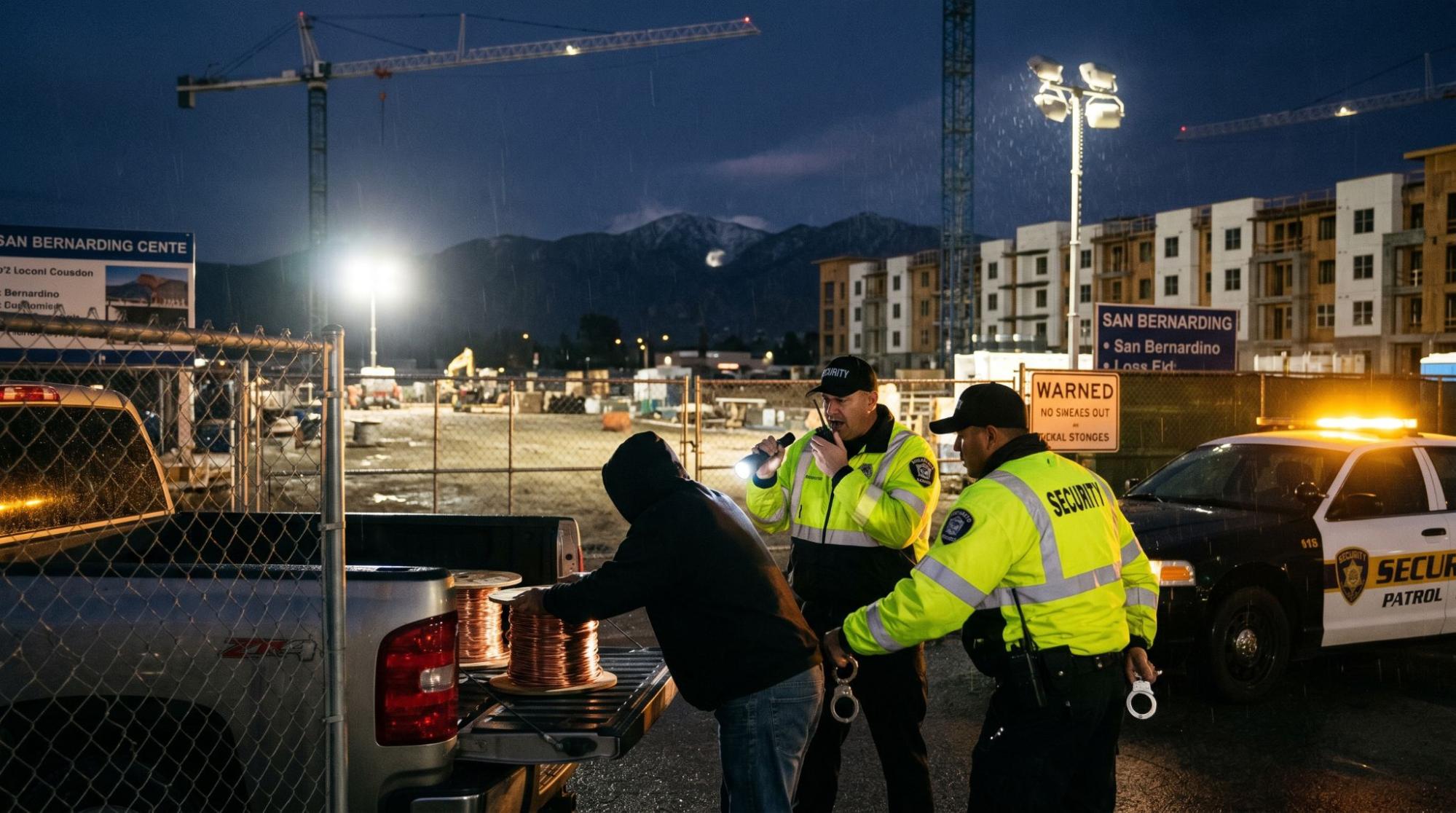

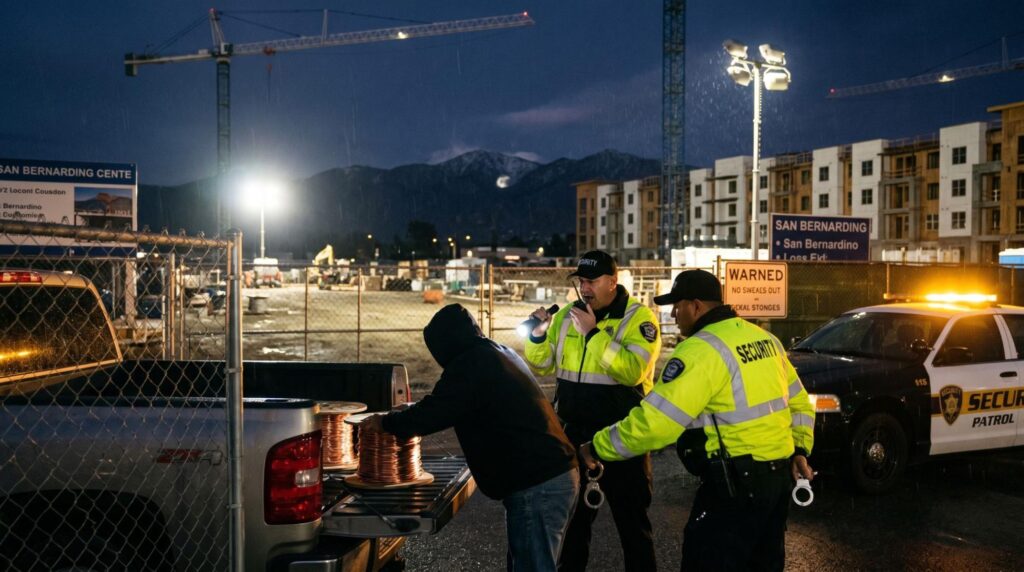
Anyone running an active job site in San Bernardino County right now already knows the math doesn’t lie. Crews show up on Monday morning, and a generator is missing. The copper wire pulled the night before is stripped off the spool. A catalytic converter is gone from a parked excavator. Sometimes it’s worse: a Bobcat skid steer driven straight off the lot through a gate that “looked locked.”
This isn’t bad luck. It’s a pattern. And the pattern is sharper in San Bernardino than almost anywhere else in California.
The county sits in the middle of a construction wave that hasn’t slowed down in years. New warehouse builds along the I-10 and I-215 corridors. Residential tract developments are expanding into Highland, Rialto, Ontario, and Victorville. Commercial pads are going up in Rancho Cucamonga and Redlands. Every one of those sites holds tens of thousands of dollars in copper, fuel, tools, and equipment that’s easy to load and easier to fence.
This blog walks through what’s getting stolen, when it’s happening, and the specific tactics security guards for construction sites use to interrupt theft before it lands on your incident report.
What’s Actually Getting Stolen from San Bernardino Job Sites
Most general contractors think of “construction theft” and picture someone driving off with a backhoe. That happens, but it’s not the everyday loss. The everyday loss is smaller, faster, and far more frequent.
Copper wire and pipe. The number-one target. Spools of THHN, ground wire, and stripped Romex disappear from electrical rough-ins constantly. Active scrap pricing in California makes copper near-instant cash for a thief.
Catalytic converters. Hit equipment yards hard during 2023 through 2025, and while statewide laws tightened, San Bernardino County still leads in reports. A converter cut off a parked truck or piece of yellow iron takes under two minutes with a battery saw.
Power tools and battery packs. Cordless DeWalt, Milwaukee, and Makita kits. Easy to grab, instantly resellable on Facebook Marketplace and OfferUp, and almost impossible to recover once they leave the site.
Diesel and gasoline. Siphoned from the equipment fuel tanks overnight. A single site can lose hundreds of gallons in one weekend.
Heavy equipment. Skid steers, mini excavators, and trailers. Less frequent but devastating. Single losses regularly exceed $50,000 before insurance friction.
Building materials. Lumber, rebar, plumbing fixtures, and appliances are staged for installation in residential builds.
None of this is news to a foreman who’s lived it. But it frames what real construction site security has to actually prevent.
The High-Risk Windows on a San Bernardino Job Site
Construction theft in the Inland Empire isn’t random. It clusters into predictable windows that anyone watching site cameras for six months can see clearly.
Friday 6 PM through Monday 6 AM is the biggest single risk window. Crews are gone, neighborhoods are quiet, and thieves have sixty-plus uninterrupted hours. Long weekends and holidays multiply it. Memorial Day, Labor Day, and the December stretch are theft season for the entire county. Weeknight hits between 2 AM and 5 AM target fuel, tools, and copper. Quick in-and-out work.
The other window contractors miss: the first two weeks after a site changes phase. When trades rotate out and fence lines move, accountability drops. Thieves know this.
These are the hours when you need a security officer on the construction site. Not a camera reviewing footage of the loss after the fact.
How San Bernardino Security Guards Stop Construction Theft
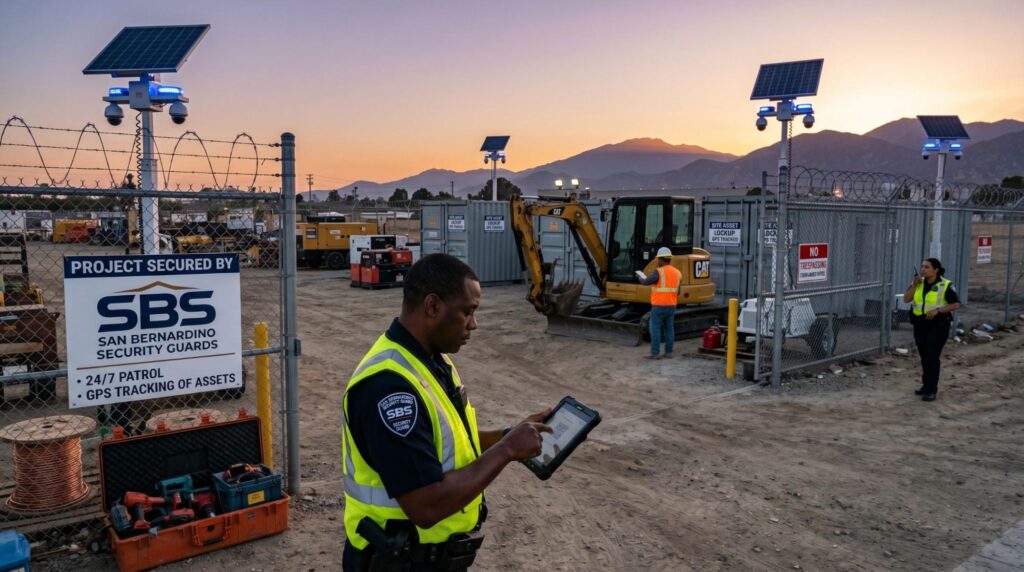
This is the part most contractors don’t get a clear answer on when they call around. Cameras “monitor.” Alarms “alert.” A trained security officer on a construction site does something different. They intervene before a loss happens. Reliable security construction site coverage isn’t about one guard standing at a gate. It’s about a layered system of presence, patrol, and reporting that runs the same way on every shift. Here’s what that looks like on the ground.
Visible Deterrence at the Right Hours
A marked patrol vehicle and a uniformed officer in a high-visibility vest at the gate during dusk and dawn changes the calculus for any thief casing the site. The vast majority of construction theft is opportunistic. Someone driving by saw an unlocked gate three days in a row. Visible presence eliminates the opportunity.
Hard Gate Control
Every vehicle in and out gets checked against a daily roster. Subs and delivery drivers logged. Anything that doesn’t match (wrong company on the truck, no scheduled delivery, after-hours arrival) gets stopped at the gate. Most equipment theft starts with a thief on the inside of the fence. A gate guard is what keeps them on the outside.
Roving Patrols on a Schedule the Site Knows, Not the Thief
Patrols are walked or driven on staggered timing. Not the same loop every hour. A guard who hits the back fence at 11:47 PM, the laydown yard at 12:13 AM, and the equipment row at 12:35 AM is uncatchable for someone trying to time the gaps.
Active Lighting and Sight-Line Discipline
A trained officer doesn’t just patrol. They keep critical zones lit and clear. Move a stacked pallet that’s blocking a camera view. Flag a busted floodlight to the GC’s super before it stays dark for a week. We covered the lighting problem in detail in our 7 Blind Spots construction security blog. Guards close those gaps day to day.
Real-Time Reporting Back to the GC
PatrolLIVE tracking and digital daily activity reports mean the project manager doesn’t get a Monday-morning surprise. Anything flagged overnight (a trespasser pushed off the lot, a fence section cut, a vehicle that circled the block three times) is in your inbox before the first crew clocks in.
Calm, Documented Response
A guard isn’t law enforcement, and a good one knows the difference. The job is to deter, document, and de-escalate. Then call the right people in the right order when something goes past those three. That documentation is what your insurance carrier and your legal team need if you ever take a real loss.
Why San Bernardino Sites Need More Than Cameras and Fencing
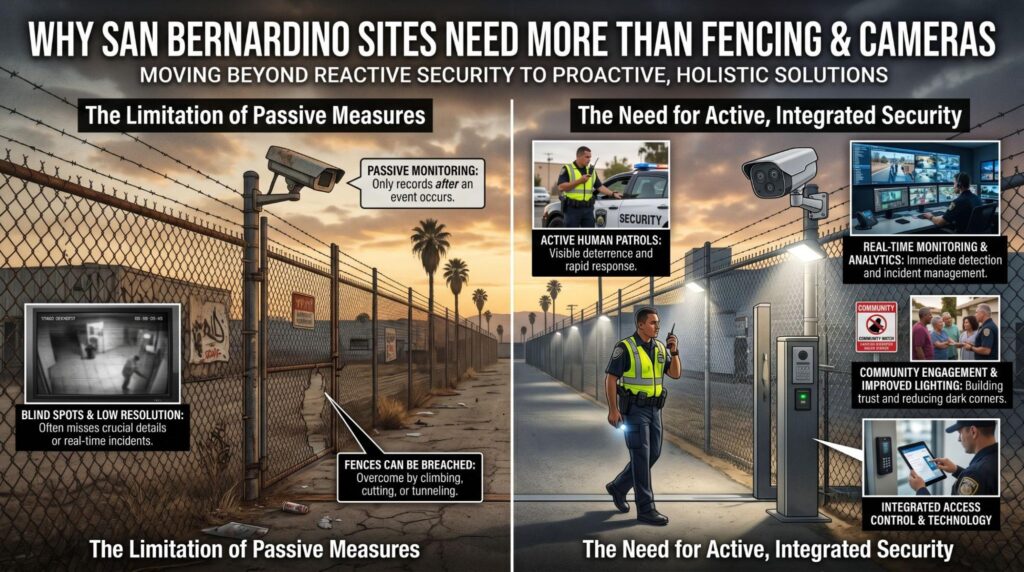
A six-foot temp fence stops nothing. Bolt cutters defeat a padlock in under a minute. Cameras record what has already happened. None of those tools, in isolation, prevents loss. They just account for it after.
This is why most experienced general contractors across the Inland Empire move toward layered coverage: physical fencing, lighting, surveillance cameras, and on-site or mobile patrol guards. The guards are the only element that makes an active decision. If you’re weighing how to combine fixed posts with patrol coverage, our breakdown on Mobile Patrol vs. On-Site Guards walks through the trade-offs.
For a complete view of how this works across the broader county, including warehouse, manufacturing, and residential sites, see our San Bernardino security guards overview.
The Real Cost of Skipping Site Security in Construction
Most general contractors and developers run the numbers wrong. They look at the monthly guard cost and stop there. The full math looks like this:
One stolen skid steer runs $25,000 to $55,000 in replacement, plus two to four weeks of project delay waiting for a rental. A single copper theft event runs $3,000 to $15,000 in materials, plus the labor cost to re-pull every run. Catalytic converter losses across a fleet weekend hit $1,500 to $4,000 per unit, plus equipment downtime. A sizable insurance claim can drive your renewal rates up 15 to 30 percent for two or three years. And owner relationship damage is the quiet one. Repeat losses make GCs look unprepared, and developers remember it on the next bid.
Compare that to staffed coverage over the same project window. The number works out almost every time, especially on jobs over 90 days with copper, equipment, or fuel on site.
What to Look for in Security Companies in San Bernardino
Not every security vendor is set up to run a construction post. Job sites are messy, weather-exposed, and change every week. Before you sign with any of the private security San Bernardino options on Google, confirm the basics:
- Active California BSIS PPO license. FlagGuard operates under PPO License No. 122256. Verify any vendor’s number on the BSIS public lookup.
- General liability insurance with additional-insured certificates available for your project.
- Documented post orders written for your specific site, not a generic template.
- Live activity reporting is delivered to the GC and project manager daily.
- Local response capacity in San Bernardino County. Not a company dispatching from LA when you need someone on-site in 30 minutes.
Any reliable security guard San Bernardino contractors trust will walk your site before quoting, ask the right questions about fence lines and laydown areas, and show up for shift one with a written plan. The right security guard San Bernardino CA construction teams hire never starts with a generic template; they build the post orders around your specific gates, shifts, and risk windows.
Get a San Bernardino Construction Security Plan Built for Your Site
Whether you’re running a single-family tract build in Highland, a warehouse shell in Rancho Cucamonga, or a multi-phase commercial development in Ontario, the right construction site security plan is built around how your project actually operates. Not pulled from a one-size template.
FlagGuard provides licensed construction security guards and 24/7 mobile patrol across San Bernardino County and the wider Inland Empire. Licensed, insured, PatrolLIVE-equipped, and ready to deploy on short notice.
Call 818-818-8111 or request a free quote. Tell us your site address, project timeline, and current pain points, and we’ll come back with a clear plan and pricing within one business day.
Frequently Asked Questions
What is the most stolen item from construction sites in San Bernardino?
Copper wire is the single most common target, followed by power tools, catalytic converters, and diesel fuel. Heavy equipment theft happens less often but causes the largest single losses. Most theft is opportunistic and happens overnight or on weekends, which is when on-site or mobile patrol guards make the biggest difference.
Do California construction sites legally require security guards?
No statewide law requires every construction site to have security guards, but many municipalities, insurance carriers, and project owners make staffed coverage a condition of the contract. Site-specific risk assessments and post-loss claims are also pushing more general contractors toward security guards for construction sites as a default for projects over a certain value or duration.
How do San Bernardino security guards actually stop construction site theft?
Through visible deterrence, gate control, scheduled but staggered perimeter patrols, real-time reporting, and documented incident response. The goal isn’t to catch thieves after the fact. It’s to make the site a hard target that opportunistic thieves skip in favor of an easier one down the block.
How much does construction site security cost in San Bernardino, CA?
Pricing depends on coverage hours, armed vs. unarmed, site size, and whether you need on-site posting or mobile patrol. Most San Bernardino projects fall into a per-hour rate typical for licensed BSIS officers across the Inland Empire. FlagGuard provides itemized quotes after a short site walk, with no long-term contract required.
How do I choose between security companies in San Bernardino for my construction project?
Compare three things: active BSIS PPO license (verify the number), general liability insurance with additional-insured certificates, and local response capacity in San Bernardino County. The right private security San Bernardino partner walks your site before quoting and provides live reporting from day one. Call FlagGuard at 818-818-8111 to start a site review.