
Event Security in Los Angeles: Planning for Large Crowds
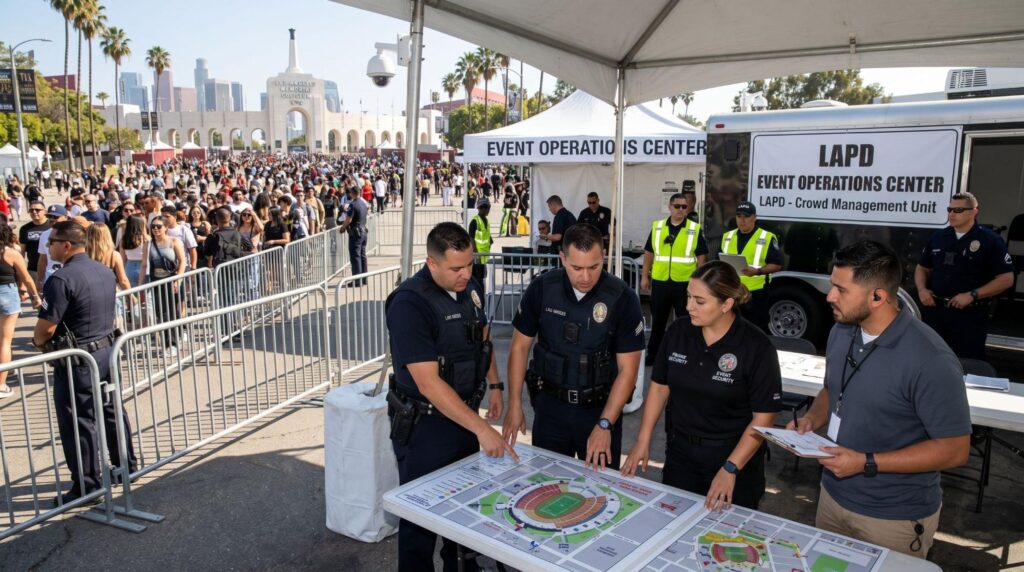
Los Angeles doesn’t do small things. Whether it’s a 500-person corporate gala in Downtown, an outdoor concert near the Hollywood Bowl, or a festival filling a parking lot off the 405, large crowds here move fast, arrive all at once, and bring problems nobody planned for. And when things go wrong at an event, a gate rush, a guest altercation, a VIP access breach, the question everyone asks afterward is: where was security?
If you’re planning a large event in LA and need to figure out the private event security side of things, this guide is for you. Not a pitch, an actual breakdown of how event security works, what you need to plan for, and how to avoid the mistakes that end up in incident reports.
What Makes Los Angeles Events Different From Everywhere Else
Los Angeles County hosts more permitted events per year than almost any metro in the country. From convention halls near the LA Convention Center (90015) to rooftop venues in Culver City, outdoor spaces in Santa Monica, and nightlife corridors through Hollywood’s 90028 zip code, the geography alone creates security challenges that most cities don’t deal with.
Traffic on the I-10, the 405, and the 101 means guests don’t arrive gradually; they arrive in waves when the freeways clear. Parking situations around Crypto.com Arena, Dodger Stadium, or the Forum create bottlenecks at entry points that nobody anticipated. LA’s climate also means outdoor events run year-round, which extends the season but removes the natural crowd-flow buffers other cities rely on.
The entertainment industry concentration here means a higher rate of VIP guests, press access, and credentialed attendees at events of all sizes. That’s a different kind of access control problem than managing a straight general admission crowd, and it’s why hiring an experienced event security company in Los Angeles matters more than people realize until something goes wrong.
The Core Elements of Special Event Security Planning
Good special event security in Los Angeles isn’t about bodies at doors. It’s about coverage built around how your event actually moves, from load-in to last guest out. Here’s what that planning looks like in practice.
Entry Point Management
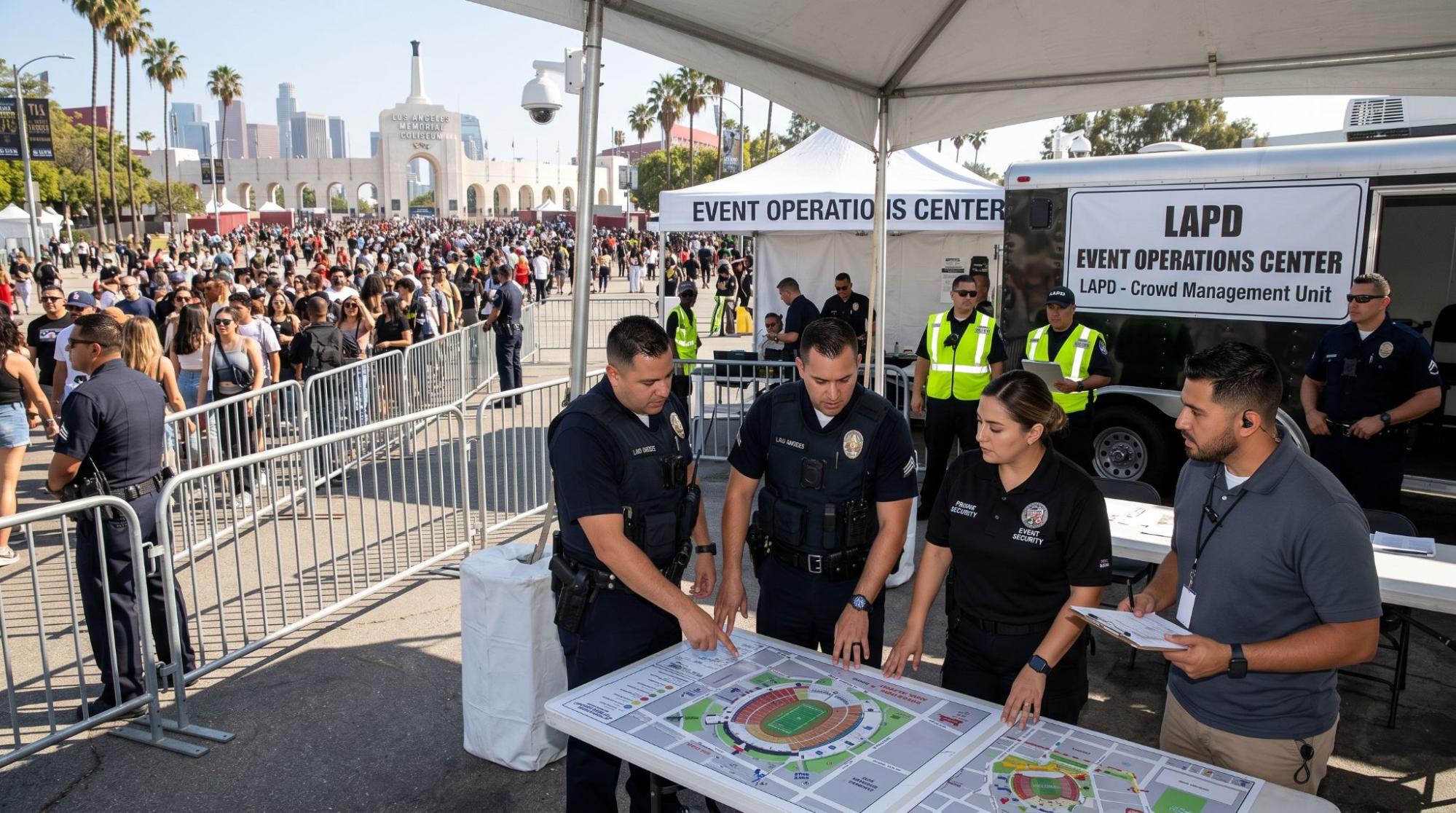
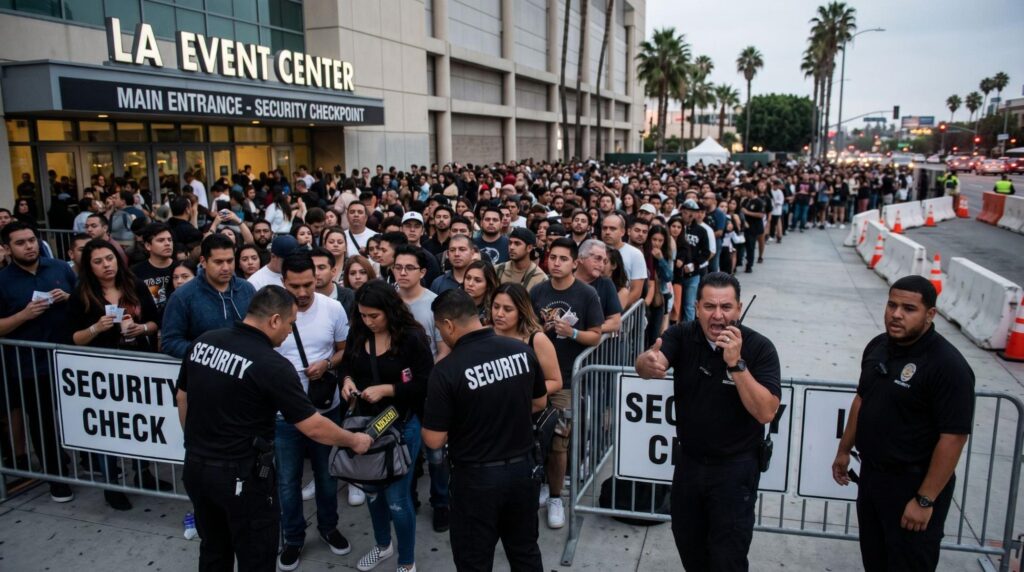
Entry is where most incidents happen. Credential checks, bag screening, and guest flow all run through your entry points, and if those are understaffed or poorly set up, the backup radiates through the whole event. For large LA events, you’re typically dealing with multiple entry types: general admission lines, VIP lanes, press access, vendor entrances, and staff gates. Each needs a defined protocol and assigned guards who know exactly what to look for.
Crowd Control During Peak Moments
Peak moments, doors opening, headline performances starting, bar service at intermission, are predictable if you’ve run events before. A crowd of 800 people pushing through the same corridor at the same time is a crowd control situation, not just a logistics inconvenience. Guards with real event experience can read that movement before it becomes a problem and reposition proactively to manage flow.
Perimeter and Restricted Zone Enforcement
Backstage areas, VIP sections, media zones, and production areas are spaces not meant for general access. Guards staffing those perimeters need to know the guest list, the credentialing system, and how to redirect someone without creating a scene. That last part is genuinely harder than it sounds at an LA event, where the person you’re redirecting might be a publicist, a journalist, or someone’s plus-one who’s absolutely certain they’re on the list.
Post-Event and Late-Night Departure Coverage
Late-night departures are consistently the most overlooked part of private event security planning. Guests are tired, some have been drinking, and everyone’s heading for their car or rideshare pickup at the same time. Parking lot visibility during this window matters more than almost any other period of the event. Having guards at exits, coordinating with venue staff until the last person clears, is non-negotiable at large events.
How Many Security Guards Does a Los Angeles Event Actually Need?
There’s no universal formula, but there are industry norms most licensed security companies and venue operators work from. The California Bureau of Security and Investigative Services (BSIS), which licenses all security guards and patrol operators in the state, doesn’t mandate specific ratios, but most professionals start from a baseline of one guard per 100 to 150 attendees for general events, adjusted based on:
- Whether alcohol is being served, this consistently increases the ratio needed
- Venue layout and total number of entry and exit points
- Whether VIP or restricted-access zones are part of the event setup
- Event type, a corporate awards dinner, runs differently from an outdoor music festival
- Local permit conditions, LA County, and City of LA permits sometimes specify minimum security staffing
For a 500-person corporate event in a managed venue, 4–6 guards is a reasonable starting point. For a 2,000-person outdoor festival near Inglewood or Pomona, the deployment looks significantly different. The right event security company won’t quote you over the phone based on headcount alone; they’ll walk the venue and build a plan around your actual layout.
Private Event Security: Armed vs. Unarmed Guards in LA
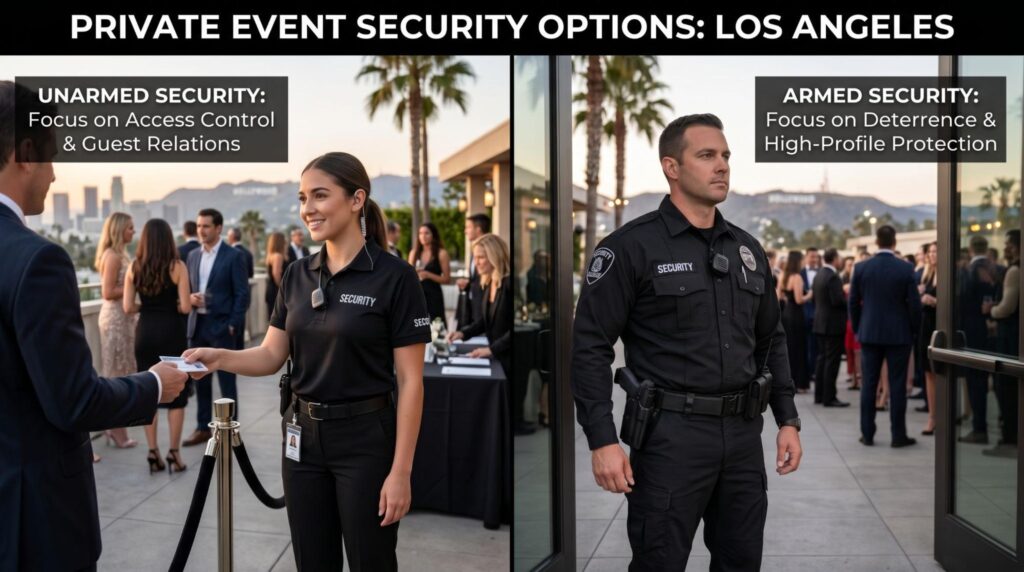
Most private events and corporate functions in Los Angeles use unarmed security guards. They’re visible, professional, trained to de-escalate, and don’t create the kind of environment that puts guests on edge. For access control, crowd management, and general incident response, unarmed guards cover the majority of what large events actually require.
Armed security guards make sense in specific situations, events involving high-profile executives or talent who need close protection, venues with elevated risk profiles, or events where cash handling or high-value assets are on site. Some venue contracts also specify armed coverage as a condition of use.
If you’re not sure which applies to your event, a reputable private event security company in Los Angeles can assess your venue, your guest profile, and your risk factors before making a recommendation. You can review FlagGuard’s licensed event security services to see how both options are structured for different event types across LA.
What to Look For When You Hire an Event Security Company in Los Angeles
California’s licensing requirements for security companies are strict. Every company providing event security guards must hold a Private Patrol Operator (PPO) license from BSIS. Every individual guard must be personally licensed. If you hire security guard services that turn out to be unlicensed, the liability exposure lands on you as the event organizer, not just on them.
Beyond the license check, here’s what actually separates good event security companies from ones that just fill shifts:
- They visit the venue before the event, not just ask for an attendance number
- Guards receive written post orders with position-specific instructions before they arrive
- There’s a defined escalation protocol, who calls whom, in what order, when something happens
- They have documented experience with your venue type, whether that’s an outdoor lot, a hotel ballroom, or a production studio
- They maintain real-time communication during the event, not radio silence until something goes wrong
If you’re searching for security guard companies near me or guard services near me in the LA area, verify PPO licensing before anything else. FlagGuard holds PPO License No. 122256 and uses PatrolLIVE for real-time guard tracking and activity reporting during events. Their security guard services across Los Angeles are built around that level of operational visibility — which matters when you’re managing 1,000 people and need to know what’s happening at every entry point simultaneously.
Mistakes LA Event Organizers Make With Security
After working events across Los Angeles County, the same failure points come up again and again. These aren’t rare edge cases.
Understaffing entry points is the most consistent one. Organizers budget for guards inside the event and cut corners at the gates, then wonder why load-in took two hours and guests arrived irritated before the first song played.
Skipping written post orders is another. A guard who doesn’t know the credentialing system, the VIP names, or the house rules can’t enforce them. If your security company doesn’t provide written post orders before the event starts, that’s a real problem.
Pulling security coverage too early creates the biggest post-event exposure. Coverage doesn’t end when the headline act finishes. It runs through a full venue clear-out, which at a large LA event is often 45 to 90 minutes after the program wraps.
And not coordinating with venue staff before doors open causes the most friction on the night itself. Your private security team and the venue’s in-house staff need to align on escalation, communication, and jurisdiction before the first guest arrives, not figure it out at 9 pm when something actually happens.
Why Licensed Event Security Matters for Liability in California
California premises liability law holds event organizers to a reasonable care standard for attendees. If an incident happens, an assault, a crowd surge, an injury during a chaotic departure, and your security coverage had identifiable gaps, you carry shared liability. California civil courts have consistently found that foreseeable incidents with inadequate security staffing result in organizer exposure.
This is why most major LA venues require proof of licensed security coverage as a condition of your event permit. Make sure any event security company you hire can provide BSIS licensing documentation and certificates of insurance for every guard on site, before the event, not the morning of.
FlagGuard’s post on security failures that lead to liability for Los Angeles businesses covers the legal exposure side in plain language, if you want to understand where the actual risk points are.
Ready to Lock In Security for Your LA Event?
Event security in Los Angeles works best when it’s built around your specific venue, crowd size, and event type. FlagGuard provides licensed private event security guards across Los Angeles County, from intimate corporate functions in Westwood to large-scale special events near Inglewood, with site-specific planning, real-time guard reporting, and no long-term contract required.
When you’re ready to hire security guard services for your next event, the process starts with a quick conversation about your venue and what coverage actually needs to look like. Reach out to FlagGuard’s team; availability is confirmed within 24 hours for most LA events.
Frequently Asked Questions
How many security guards do I need for a large event in Los Angeles?
Industry practice starts around one guard per 100–150 attendees, adjusted for alcohol service, venue layout, VIP sections, and permit conditions. A licensed event security company in Los Angeles should walk your venue before giving you a staffing number. Any quote based purely on headcount without a site visit is an estimate, not a real plan.
Do I need a licensed event security company in California?
Yes. Any company providing event security guards in California must hold a Private Patrol Operator (PPO) license from BSIS. Individual guards must also be personally licensed. Hiring unlicensed security exposes you as the organizer to significant liability and may violate your venue’s permit conditions. Ask for PPO documentation before signing anything.
What does private event security actually do at a large event?
Event security guards handle entry monitoring, credential and ticket verification, crowd flow during peak periods, restricted zone enforcement, VIP access control, and post-event departure coverage. Good event security teams also communicate in real time with venue staff and follow defined escalation protocols, so when something happens, everyone knows exactly what to do.
How much does special event security cost in Los Angeles?
Pricing depends on guard count, hours, armed vs. unarmed coverage, and whether post orders and site planning are included. LA rates run higher than national averages due to BSIS licensing requirements and local cost of living. Get at least two quotes from licensed event security companies, and confirm each covers the same scope before comparing. A lower number that excludes entry coverage or departure management isn’t actually a better deal.
How do I hire event security guards near me in Los Angeles?
FlagGuard provides licensed event security guard services across Los Angeles County with no long-term contract required. Share your event date, venue location, type, and expected attendance, and they’ll build a coverage plan around your specific layout. Most bookings are confirmed within 24 hours. Contact FlagGuard’s team to get your quote and confirm availability.