
Retail Closing-Time Security Guards: Where Incidents Spike and Why
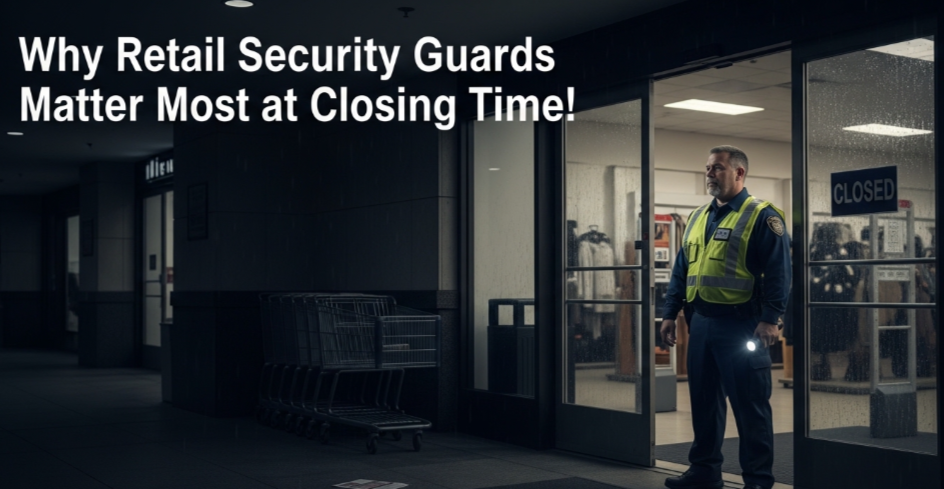
Closing time is when a normal retail shift turns into a high-risk window. Staff are tired, customers rush in the last few minutes, doors open and close constantly, and cash or product is moving in the background. That is exactly why smart owners build a closing plan around retail security guard services from a reliable retail security guard service company, not just cameras and hope. If you want a site-first plan that fits your store hours and layout, start with FlagGuard.
The Closing-Time Window That Drives Most Retail Security Incidents
Most incidents do not happen “sometime at night.” They spike in three tight windows that repeat every day. Treating those windows like a schedule is the difference between random coverage and real retail security coverage.
- 30 minutes before close: last-minute shoppers, fitting room traffic, returns, and distracted staff
- At close: door control, “one more minute” arguments, and staff splitting between the floor and the back-of-house
- 30 minutes after close: lock-up, trash runs, staff exits, and quiet back doors that get tested
If your store sits inside a larger property, this same pattern affects common areas, too. That is why many sites pair store-level coverage with Commercial Security to keep the entire property consistent.
Why Incidents Spike at Close Even in Well-Run Stores
Closing time creates the same pressure points in almost every category of security for stores and retail security stores:
- People who do not want to leave push boundaries
- Someone tries a quick grab when staff attention is split
- Doors get propped during “final tasks.”
- The parking lot becomes less visible and more unpredictable
California retail theft trends have climbed over the last decade. Reported retail theft increased by about 11% from 2014 to 2023. Shoplifting rose again in 2024, and it is still far higher than in 2019. Those numbers are not meant to scare you. They are meant to justify a practical plan that is consistent, documented, and easy to run, even when you are comparing retail security companies.
The best part is that the fixes are usually simple. They need a clear process, which is why we start every post with the same structure from Our Process.
Front Door Control That Makes Retail Security Guards Effective at Close
Most closing-time problems start at the front door. Your goal is calm control, not confrontation. A trained retail security guard focuses on the flow of people, the last-minute rush, and the moment the doors shift from “open” to “closed.”
What the guard should do in the final 30 minutes:
- Stand where the door and the entry lane are both visible
- Watch for repeat in-and-out patterns and distracted “handoff” behavior
- Coordinate with staff on “last customer in” time and announcement timing
- Stay consistent, even when someone argues or begs for “one item.”
At close, the priorities shift:
- Prevent re-entry through side doors and emergency exits
- Keep the door secure while the staff finish floor checks
- Create a clear end-of-day posture that customers can read
This is where retail store security guards work best when they are part of the store routine, not an add-on. If you need a steady lobby or entrance post, On-Site Security is built for that kind of fixed coverage.
Cash Office and Register Areas Where Loss Prevention Gets Tested
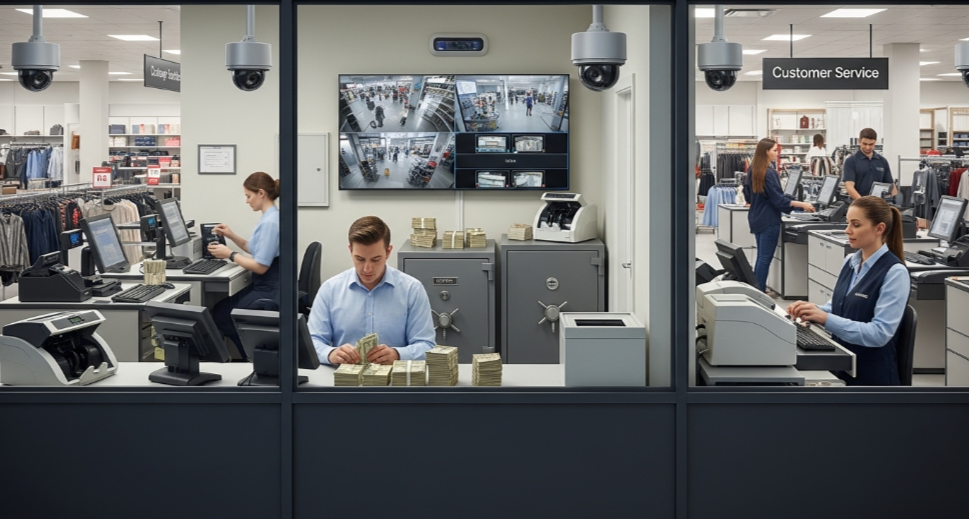
Closing time is also when cash handling can become visible. You do not want the cash office or register lane to look like a predictable routine that outsiders can watch from a distance. That is where retail security management becomes practical, not theoretical.
What helps most:
- Keep the cash move timing varied, not identical every night
- Reduce visibility from the front windows when drawers are opened
- Use a single controlled path for deposit movement
- Have the guard positioned to watch the approach, not the cash itself
This is also the moment when strong retail security guard companies train for calm de-escalation. Some closing-time incidents are not theft. There are arguments, frustration, and refusal to leave. The right guard knows how to keep the tone professional and keep the team safe.
If you manage multiple site types, it helps to match the plan to your environment using Industries We Serve.
Stockrooms, Receiving Doors, and Back Hallways That Get Quiet Too Fast
The front door gets attention. The back door is where problems slip through. Receiving doors, stockrooms, and back hallways are quieter at close, which makes them attractive targets.
What a strong store security guard checks on each closing loop:
- The receiving door is fully latched and not cracked open
- Stockroom access is limited to staff only
- Back hallway doors not propped for “quick work.”
- Any unusual movement near loading areas or trash corridors
Most repeat incidents come from the same weak spot. That is why a closing plan should include proof, not just memory. A simple camera review supports guards when used correctly, especially for back-of-house zones. If you want that layer, Surveillance & Monitoring can support coverage without replacing the guard presence.
Parking Lot and Employee Exit Zones Where Risk Jumps After Close
For many stores, the most vulnerable moment is when employees walk out. Cars are spread out, lighting is uneven, and a quiet lot can change the feel of a shift instantly. This is a key reason retail security services must include exterior checks, not just inside coverage.
A reliable closing-time exterior routine:
- Patrol the employee exit route before staff leave
- Watch for vehicles circling or parked unusually close to exits
- Stay visible near the main walkway during the first 10 minutes after close
- Offer a short escort presence when needed, especially for late exits
If a store does not need a full-time post, a planned Mobile Patrol schedule can still hit these windows consistently.
This same exterior focus matters for retail centers, where shopping mall security guards often reduce incidents simply by showing up at the right zones at the right time.
Side Doors, Trash Runs, and Back Alleys Where Incidents Start Quietly
Trash runs and back alleys are where routines create predictability. If staff always go out the same door at the same time, someone watching learns your pattern fast. A professional retail security guard company treats these small tasks as part of the closing plan.
What to tighten:
- Use one controlled back door for trash runs, not multiple exits
- Keep the door closed between trips, no propping
- Have the guard check the alley line before and after the trash run
- Keep vendors and late deliveries out of the back corridor after close
If parking conflicts and late-night loitering are part of your risk profile, Parking Enforcement can reduce the friction points that often show up right at close.
The Incident Reporting That Makes Retail Security Consultants Worth It
Retail owners do not just want a guard. They want fewer repeat problems. That only happens when incidents are documented in a way that turns into action. This is where a retail security consultant’s mindset helps, and it is the same approach many retail security consultants use when they audit a location.
What a useful closing-time report includes:
- Exact time and exact location, not “front area.”
- What happened, what was observed, and what action was taken
- Photos when appropriate and safe
- Patterns noticed, like the same car returning or the same door being tested
- Follow-up needs: lighting repair, lock repair, camera angle change
If you want ideas on what to document and how to turn reports into prevention, you can pull examples from our Blog.
Choosing the Right Retail Security Firms for Closing-Time Coverage
Not every store needs the same setup. A few need a fixed entrance post. Some need a closing-time surge. Some need after-hours patrol checks. A good security company for retail should explain options clearly and help you choose based on your risk windows, not generic promises.
A simple fit guide:
- Fixed post: best for repeat incidents and high traffic at the entrance
- Closing-time surge: best when incidents spike near close, but daytime is stable
- Patrol checks: best for quieter locations needing consistent verification
- Monitoring support: best when cameras exist, but response is inconsistent
If your store runs seasonal events, late-night promotions, or peak shopping weekends, adding Event Security to the closing plan helps keep entrances, walkways, and parking areas controlled.
Get Retail Security Guard Services That Fit Your Store Hours
If you are looking for retail security guard services that feel professional, consistent, and easy to work with, we can build a closing-time plan around your layout, staffing, and risk windows. For stores in Southern California, including Los Angeles, we focus on the zones where incidents spike and the routines that stop repeat problems.
To request a quote for retail security guards, use Get a Quote and share your closing hours, store type, and top problem areas. If you prefer to talk through coverage options first, reach out through Contact Us. FlagGuard can also help you adjust coverage seasonally, so you are not stuck with the same plan year-round.