
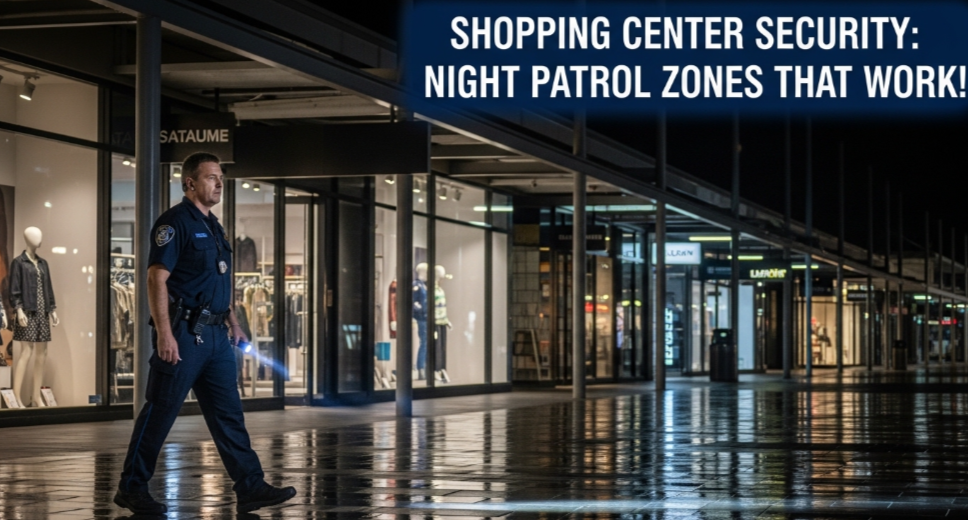

Security Guards for Shopping Centers: Night Patrol Zones That Reduce Incidents
When a shopping center gets quiet, incidents do not stop. They shift. The parking lot security risk goes up, back corridors get tested, and side entrances turn into shortcuts. A strong night plan is not random walking. It is a map, a schedule, and proof that checks happened.
In this guide, we break down the patrol zones that matter most for shopping center security, how shopping mall security guards should cover them, and what to document so the same problems do not keep coming back. If you want a site-first patrol plan built around your actual property layout, start with FlagGuard and our commercial security coverage.
Why Nighttime Incidents Start Outside Stores in Shopping Centers
Most issues after-hours security begins in transitional spaces: the edge of the lot, the walkway between stores, the stairwell in parking structures, or the service door near the dumpsters. That is where lighting is uneven, and routines get sloppy.
California has seen retail theft rise over the last decade. One official statewide report notes that reported retail theft increased by about 11 percent from 2014 to 2023. That is not a shopping center-only number, but it supports what property teams feel on the ground: prevention has to be consistent.
If you want security in shopping centers that hold up after midnight, your patrol plan must cover the zones where people test the property first. For centers in Los Angeles, this is especially important around closing-time transitions and late-night foot traffic.
Night Patrol Zone Map That Makes Shopping Center Security Predictable
A smart patrol plan uses hot zone thinking. We do not walk the whole property evenly. We hit the areas where incidents start, then we loop back again. This is what turns shopping center security guard services into a real deterrent.
Your zone map should include:
- parking lot security zones (outer edges, dark corners, far rows)
- parking structures (stairwells, elevators, pay stations, pedestrian exits)
- entrances and exits (main doors, side doors, anchor transitions)
- service corridors and loading docks (back-of-house, trash areas, deliveries)
- perimeter security (fences, gates, cut-throughs, alley access)
- Storefront walkways (ATM areas, seating pockets, hidden corners)
If your center is better suited to rotating checks instead of full-time staffing, a structured mobile patrol schedule can still cover these exact zones with consistent timing and reporting.
Below are the zones that reduce incidents fastest when patrols are consistent.
Parking Lot Patrol Zones That Reduce Car Break-Ins and Conflicts
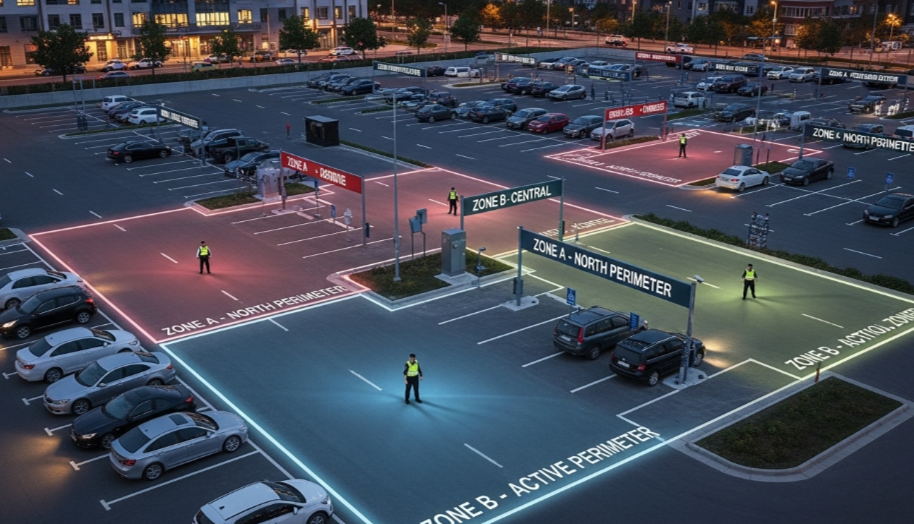
For most properties, the lot creates the most calls. It is where people linger after closing, where disputes escalate, and where break-ins happen when a row feels unwatched. This is why shopping mall security needs a lot of first approach, especially in high-traffic areas like Orange County, where centers can stay active late.
What a shopping plaza security guard should check on every loop:
- Far rows and outer edges, especially where lighting drops off
- Areas near landscaping that block sightlines
- Vehicle cut-through lanes and quick exit routes
- Groups gathering near closed storefronts
- Any car with doors open, trunk activity, or repeated circling
Fast fixes that make patrols more effective:
- Identify two must-hit corners and return every loop
- Coordinate with tenants on closing time, cash moves
- Keep a visible presence near problem rows, not just the center walkway
Use incident reporting to capture patterns: the same row, the same time window, the same behavior. If recurring parking disputes are part of your night risk, targeted parking enforcement support can reduce conflict and keep lanes clear.
Parking Structures and Stairwells Where Night Incidents Hide After Closing
If your center has a garage, treat it like a separate property. The stairwell, elevator lobby, and upper levels often become blind spots. A strong shopping center security guard plan assigns specific checks inside these areas, not just a drive-through.
What to check in shopping center video security zones:
- Stairwell doors are latching and not being propped open
- Elevators for loitering, vandalism, or suspicious movement
- Pay stations and kiosks for tampering
- Upper levels where fewer people park and cameras may be weaker
Patrol tactics that work:
- Walk one stairwell per loop, rotate through all stairwells per shift
- Pause at landings for visibility and listening
- Note broken lights and camera blind spots immediately
This is where mall security guards add value over cameras alone. A camera records. A guard interrupts the behavior. If your property already has cameras but the coverage is not supporting patrol work, surveillance, and monitoring, support can connect visibility with real response and reporting.
Entrances, Exits, and Anchor Transitions That Get Tested First
Most after-hours entry attempts happen at side doors, not the main entrance. Anchor store transitions also create confusion: people assume a door is public when it is really a staff entrance.
What to include in retail building secure entry checks:
- Main entrances: glass doors, locks, and emergency exit hardware
- Side exits near anchors: latch, closer, and alarm status
- Common corridor doors: propping, tape, or damaged frames
- Employee entrances: tailgating and badge sharing risks
A practical guard routine:
- Early shift: confirm the top five doors are secure
- Mid shift: re-check the two most targeted doors
- Late shift: final door sweep before the quietest hours
This structure is one of the most effective shopping center security solutions because it removes easy entry and forces problems into the open.
Service Corridors and Loading Docks Where After-Hours Access Starts
Back-of-house zones are where thieves expect less attention. The trash area, service corridors, and delivery lanes create privacy and quick exits. This is why shopping center gate security and back corridor patrols should never be skipped, especially at mixed-use centers in Riverside County, where lots and delivery lanes can be spread out.
What to check in service corridors and loading docks:
- Dumpster areas for loitering and concealment
- Service doors for latch and hinge damage
- Delivery roll-up doors are partially open
- Staged pallets or high-value goods left unsecured
- Unauthorized vehicles near delivery lanes
Practical fixes:
- Add a back corridor loop at consistent times each night
- Keep service doors on a checklist with latching verification
- Coordinate with vendors to reduce surprise deliveries
This is where shopping center surveillance security works best when paired with patrols. Cameras help confirm. Guards make it harder to act.
Perimeter and Gate Security Zones That Stop Quick Cut-Throughs
A lot of incidents start with a simple cut-through. People use alleys, side streets, and gaps in fencing to avoid visibility. A strong perimeter plan is essential for shopping center security and larger open-air properties.
What to check for perimeter security:
- Fence gaps, pushed panels, or loose gates
- Alley access points behind anchor stores
- Broken lighting near the perimeter line
- Foot traffic patterns cutting behind buildings
- Vehicles are parked where they should not be
Best practice patrol zones:
- Perimeter edges early in the shift
- Perimeter edges again during the quietest hour window
- Gate checks at every loop, not once a night
A well-run security service commercial plan treats gates as controls, not decoration.
Patrol Routes and Incident Reporting That Prove Coverage Is Working
A patrol plan is only as good as the proof. Property managers want to see that patrols happened, doors were checked, and issues were acted on. That is why incident reporting matters as much as the walk, and why clear patrol routes matter.
What to include in nightly documentation:
- Patrol timestamps and the zones covered
- Doors checked and any exceptions found
- Photos of damage, propping, or unsafe conditions
- Notes on repeat locations and behavior patterns
- Follow-up items for lighting, locks, or repairs
When reporting is consistent, you can create a simple weekly heat map: where incidents cluster, what time they happen, and which zones need tighter coverage. If you want a clear structure for how patrol plans get built, adjusted, and verified, follow the same step-by-step approach outlined in our process.
Choosing Shopping Center Security Solutions That Fit Your Risk Windows
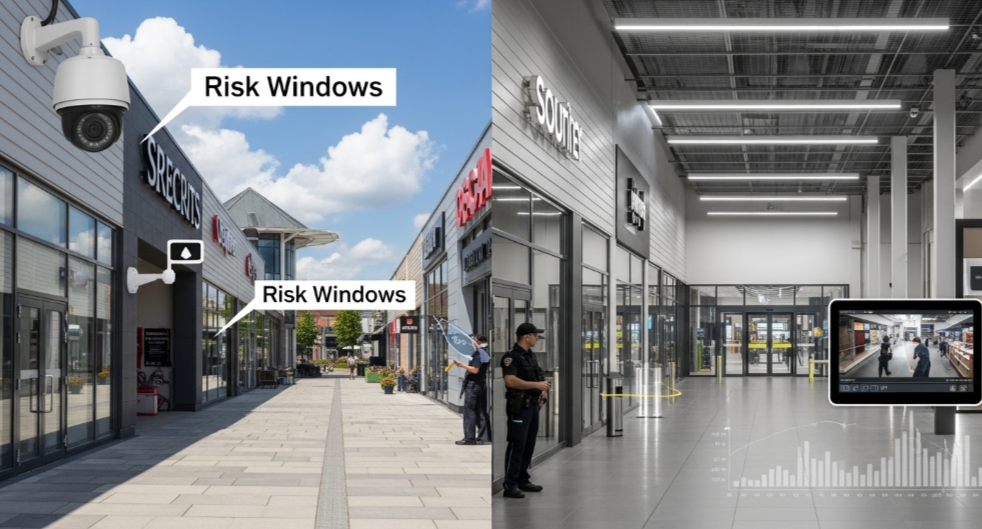
Some centers need an on-site guard presence every night. Others do better with patrol checks plus surveillance support. The key is matching coverage to your risk windows.
A simple fit guide:
- On-site guards: best for late-night activity, repeat calls, and high foot traffic
- Patrol checks: best for quieter properties needing consistent visibility
- Monitoring support: best when cameras exist, but response is inconsistent
If your shopping center sits inside a larger mix of property types, the quickest way to map the right approach is to compare your site against similar environments in the industries we serve.
Get Night Patrol Coverage for Shopping Centers Across Southern California
We serve shopping centers across Southern California, including San Bernardino County and Ventura County, with patrol plans built around the zones that reduce incidents, not generic walkthroughs.
Ready for a fast quote and a patrol-zone plan? Use Get a Quote and share your closing hours, problem areas, and which zones you want covered most.