
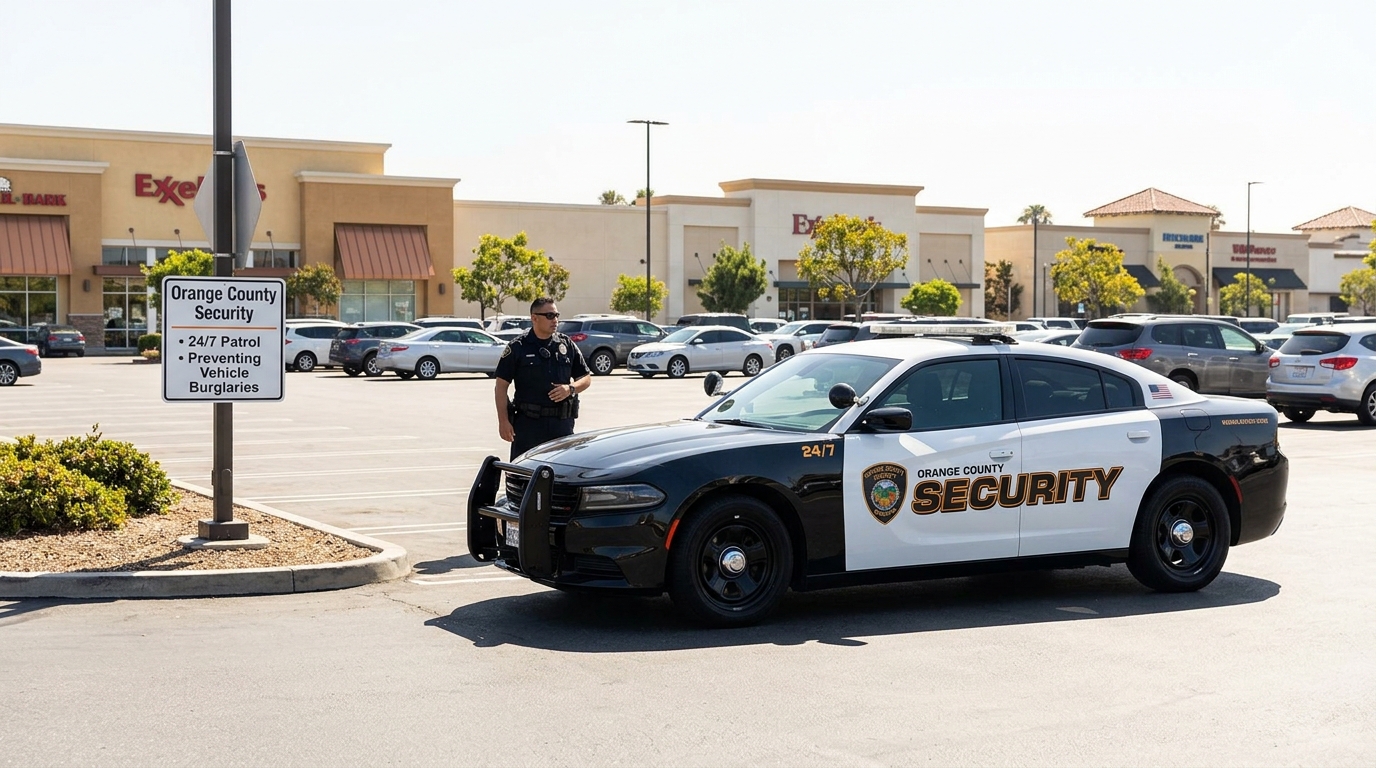

Parking Lot Security in Orange County: Stopping Car Break-Ins
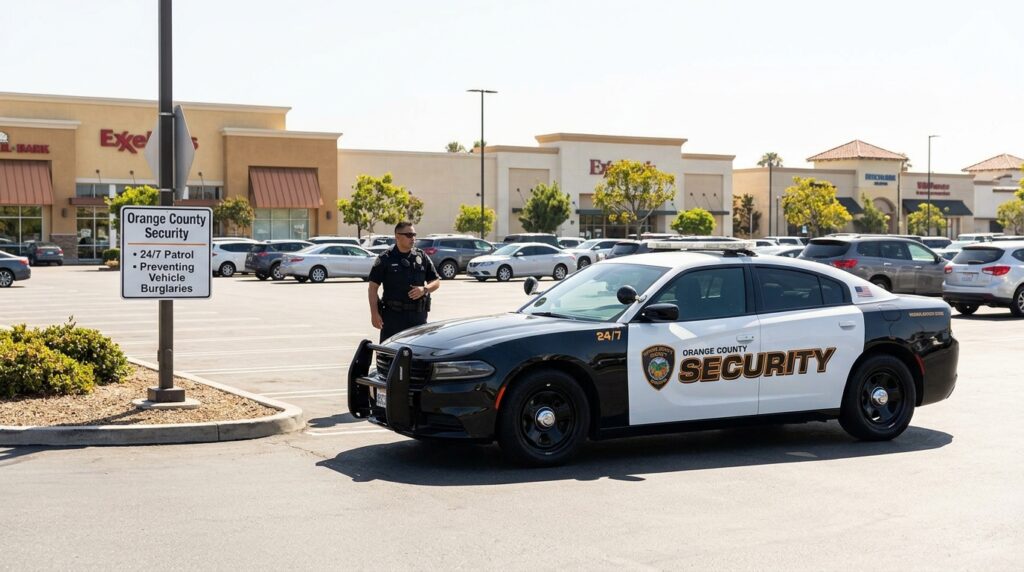
A shattered window. A missing laptop bag. A tenant who now parks somewhere else. That’s usually how a property manager finds out their parking lot has a problem, not from a report, but from a complaint email at 9 a.m. after a break-in happened at 11 p.m. the night before.
Orange County has a specific version of this problem. Retail corridors near South Coast Plaza and Irvine Spectrum draw huge evening crowds, medical campuses in Santa Ana and Anaheim run late shifts, and freeway access off the I-5, SR-55, and SR-22 makes it easy for someone to hit a lot and be gone in minutes. Warm evenings keep parking areas busy well past dark, which sounds like a good problem to have, until you realize it also means more unattended vehicles sitting for longer stretches.
If you manage a shopping center, HOA, apartment complex, or office park in Orange County, this isn’t a hypothetical. It’s a scheduling and visibility problem, and it’s fixable.
Why Orange County Parking Lots Draw Break-Ins
Car break-ins aren’t random. They follow patterns that property managers can actually plan around. Vehicles sitting in the same spot for hours, poor lighting near the edges of a lot, and blind corners created by landscaping or trailers all create opportunity. Industry groups like the National Insurance Crime Bureau and Cargo Net Loss Prevention have long pointed to unattended, high-turnover lots, retail centers, transit-adjacent parking, and mixed-use developments as consistent targets, and the FBI’s Uniform Crime Reporting program tracks larceny-theft from vehicles as one of the most common property crimes nationally.
Orange County adds a few local wrinkles. Retail density near South Coast Plaza and The Outlets at Orange means large lots with thousands of daily visitors, many of whom aren’t familiar with the property and won’t notice anything unusual. Medical facilities in Santa Ana and Anaheim run 24-hour parking areas where staff cars sit through overnight shifts. And HOA and apartment lots in cities like Irvine and Costa Mesa often have limited lighting budgets, which creates exactly the kind of dim, low-visibility zones break-ins favor.
None of this means Orange County is uniquely dangerous. It means the combination of retail traffic, freeway access, and overnight parking creates predictable risk, and predictable risk is the kind you can actually reduce.
What a Break-In Actually Costs Your Property
The dollar value of a stolen laptop or smashed window is rarely the real cost. The bigger cost is what happens next: a tenant who tells three other tenants, a resident who brings it up at every HOA meeting, or a customer who leaves a review mentioning “the parking lot” instead of your business. Property managers who’ve dealt with a security failure that snowballed into a liability issue know how fast that conversation can turn; we covered several versions of that pattern in 5 security failures that create liability for California businesses, and parking lot incidents show up in that list more often than most managers expect.
There’s also a quieter cost: turnover. Tenants and residents who don’t feel safe walking to their cars don’t renew leases, and shoppers who’ve had a bad experience in your lot simply go somewhere else next time. Compared to that, the cost of consistent enforcement is small.
What Real Parking Enforcement Looks Like
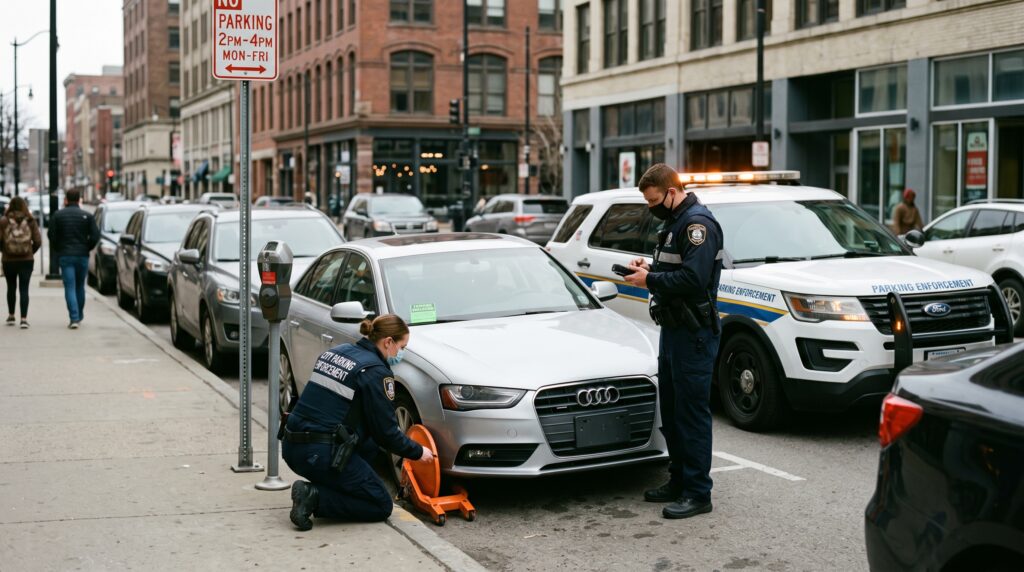
A lot of properties think “parking enforcement” just means a sign and an occasional tow. In practice, effective coverage looks more structured than that. Licensed officers verify permits, flag unauthorized vehicles, and patrol fire lanes, handicap zones, and reserved spots on a set schedule rather than at random. Violations get documented with photos and written notices, which matters if a dispute ever comes up later. Tow coordination follows California Vehicle Code Section 22658, so property owners stay on the right side of the law when a vehicle actually needs to be removed.
This is the core of FlagGuard’s parking enforcement services: site-specific plans built around your property’s layout, signage, and peak hours rather than a generic patrol route. A retail center with an 8 p.m. rush needs a different rhythm than a 24-hour medical facility, and the enforcement plan should reflect that.
Patrol Timing Is the Part Most Properties Get Wrong
Here’s where a lot of parking security plans fall short: they schedule patrols evenly across a shift instead of concentrating coverage where and when incidents actually cluster. Break-ins tend to spike in the hour or two after a retail center’s peak crowd thins out; cars are still there, but foot traffic has dropped, which is exactly the kind of window a night patrol zone is designed to close. We wrote about this pattern in more detail in Shopping Center Security: Night Patrol Zones That Work, and the same logic applies directly to parking lots.
A well-timed patrol does two things at once: it puts a visible presence in the highest-risk window, and it creates a documented record that coverage happened, which matters if an incident does occur and a tenant or insurer asks questions later.
Choosing the Right Security Partner in Orange County
If you’re comparing security companies in Orange County, the sales pitch usually sounds similar across the board. The differences show up in the details. Ask whether the guards are direct employees or subcontracted, since that affects training consistency. Ask to see the BSIS license number and confirm it’s current; this is non-negotiable in California, and any legitimate provider will have it on hand without hesitation. Ask how violations get documented, whether reporting is real-time or end-of-shift, and what the escalation process looks like if a guard identifies a suspicious vehicle or person.
If your property needs a visible deterrent rather than just documentation, some Orange County properties look specifically for private armed security or private security guard companies with armed-officer options, particularly for 24-hour industrial or medical sites. Others just need consistent unarmed patrol and enforcement. There’s no single right answer; it depends on your property’s risk level, foot traffic, and history of incidents.
Rather than working through a list of security guard companies one by one, it’s usually faster to ask each candidate the same handful of questions: licensing, staffing model, documentation, and escalation, and compare answers directly. That’s a better filter than reputation alone, and it applies whether you’re evaluating a single security guard or a full security patrol program.
Getting Started: What to Ask For
Before you sign anything, put together a short list: your parking layout and problem zones, your current signage, your peak hours, and any incidents from the past six to twelve months. A serious provider will use that information to build a site-specific plan rather than handing you a one-size-fits-all quote. FlagGuard serves properties across Orange County with exactly this kind of tailored approach, reviewing your site first, then defining coverage and post orders around what your property actually needs.
If your lot has had a break-in, a string of minor incidents, or just a persistent feeling among tenants that the parking area isn’t being watched, that’s usually the signal it’s time to bring in licensed coverage rather than wait for something bigger to happen.
Ready to Secure Your Parking Lot?
A patrol schedule built around your property’s actual risk windows, documented enforcement your management team can rely on, and a licensed team that knows California’s tow and vehicle code requirements- that’s what stops a parking lot problem from becoming a liability problem. Reach out to our team for a site review and a straightforward quote.
Frequently Asked Questions
How do I stop car break-ins in my parking lot?
Start with better lighting and clear sightlines, then add scheduled patrol coverage during your property’s highest-risk hours, usually right after peak traffic thins out. Licensed parking enforcement officers who document violations and maintain a visible presence are the most consistent way to reduce repeat incidents.
What does parking lot security cost in Orange County?
Pricing depends on lot size, patrol frequency, and whether you need full-time, peak-hour, or 24/7 coverage. Most providers, including FlagGuard, offer a free quote once they know your property type and coverage hours; call 818-818-8111 to get a tailored estimate.
Do parking lot security guards actually deter theft?
Yes. A visible, on-site presence is one of the most reliable deterrents against opportunistic break-ins, since most vehicle theft depends on the offender believing no one is watching. Consistent patrol timing matters more than simply having a guard on-site at some point during the day.
What’s the difference between armed and unarmed parking patrol?
Unarmed enforcement officers handle permit checks, documentation, and tow coordination for most retail, HOA, and commercial lots. Armed coverage is typically reserved for higher-risk sites like 24-hour industrial yards or medical facilities with a documented history of serious incidents.
How do I find the best security guard companies in Orange County?
Compare licensing (BSIS number), insurance and bonding, staffing model (employees vs. subcontractors), and how quickly violations get documented and reported. Call FlagGuard at 818-818-8111 or request a free quote to see how a site-specific parking enforcement plan would work for your property.